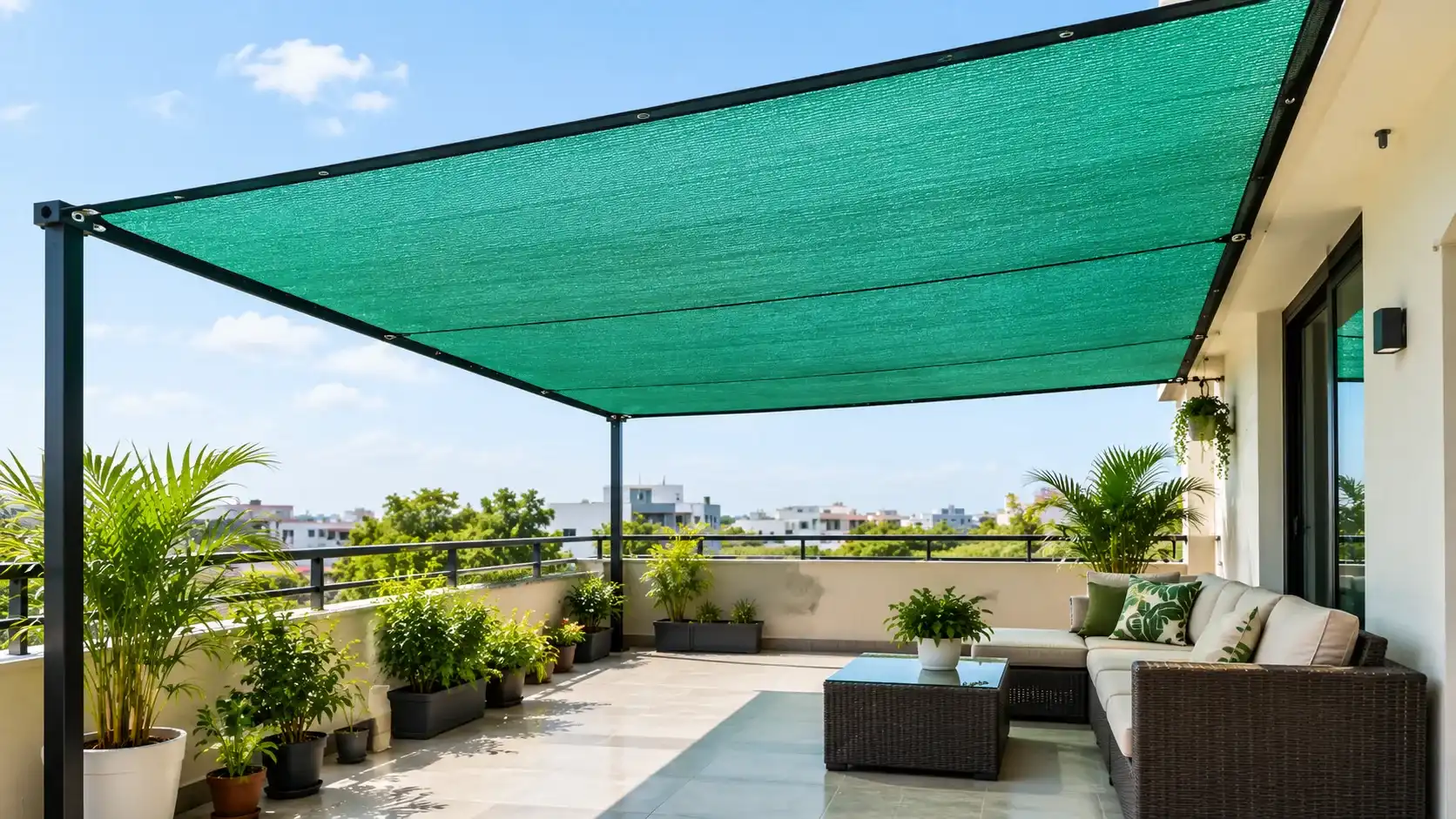
7 Shade Net Installation Mistakes Indian Homeowners Should Avoid

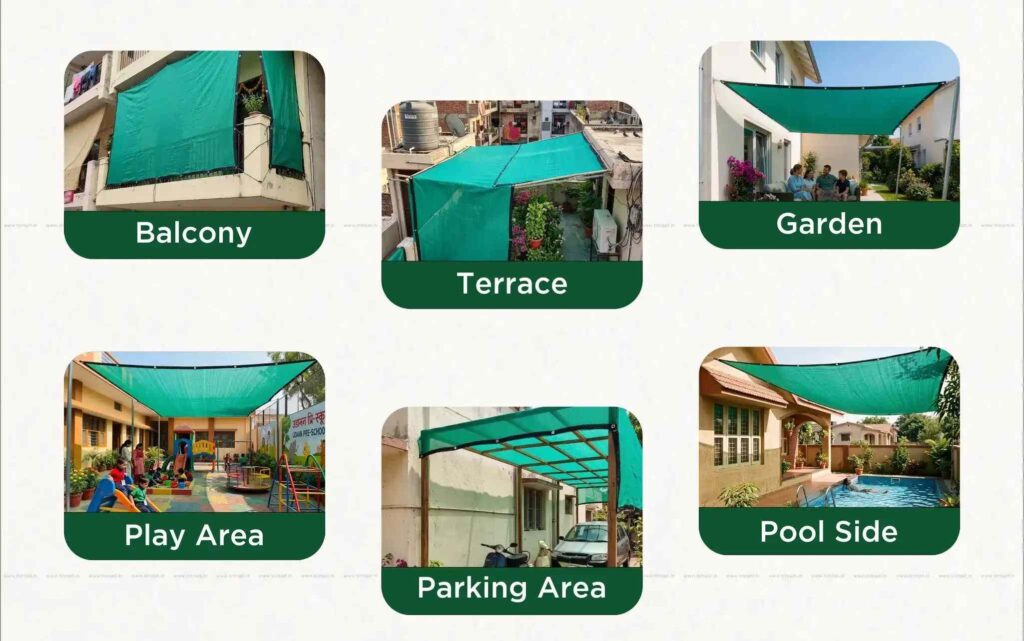
A shade net can make a balcony, terrace, garden, car parking area, or other outdoor space more comfortable during India’s hot and sunny months. But choosing a good shade net is only one part of the job. Correct installation also matters.

Many homeowners focus on the size, color, or shade level of the net but overlook simple installation details. The result can be loose fabric, poor shade coverage, unnecessary stress on the fixing points, or reduced usability of the shaded area.

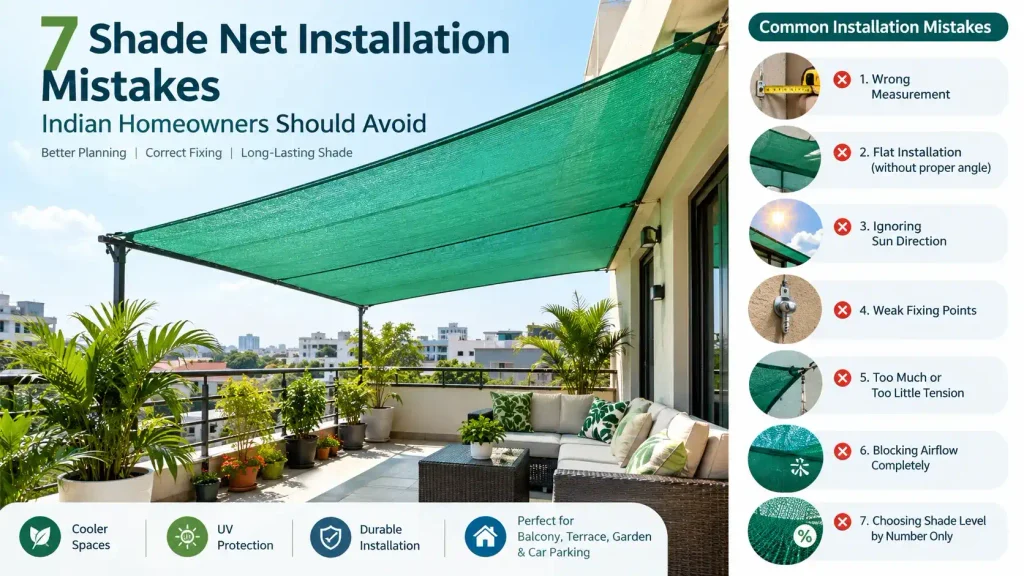
If you are planning to install a green shade net for your home, these are seven common mistakes worth avoiding.

1. Measuring the Area Without Considering the Fixing Points

One of the most common mistakes is measuring only the area that needs shade.

For example, if you want a shade net for a balcony or terrace, the available fixing points may be inside the actual boundary of the area. The net also needs suitable space for fixing and tensioning.

Before ordering a shade net, measure:

  • The position of walls, poles, or other fixing points
  • The direction from which sunlight enters
  • The space required for proper fixing
  • Any obstacles such as pipes, doors, windows, or railings

A simple measurement plan can help you avoid ordering a size that is difficult to install.

2. Installing the Net Completely Flat

A shade net should not simply be stretched across an area without thinking about its position and tension.

For outdoor installations, the arrangement of the fixing points can affect how water, dust, and air behave around the covered area. A suitable installation angle can also make the setup more practical.

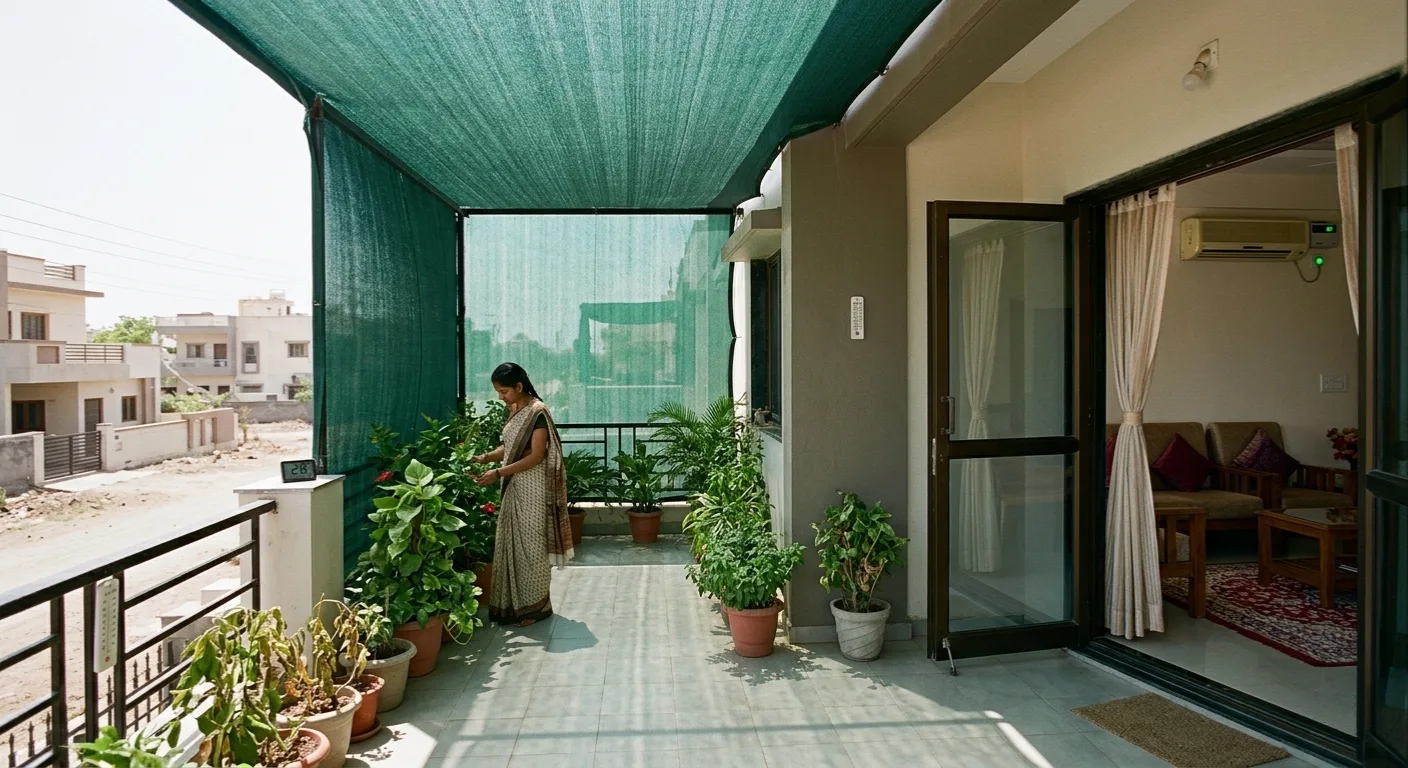
For a balcony, terrace, or garden, first decide where the net should provide the maximum useful shade during the hours when sunlight is strongest.

The goal is not just to cover an area with fabric. The goal is to create a usable shaded space.

3. Ignoring Sun Direction

This is another mistake that homeowners often make.

A shade net may cover the correct area but still leave part of the balcony or sitting space exposed if the position of the sun is not considered.

Before installation, observe your space at different times of the day.

For example:

  • Morning sunlight may enter from one side.
  • Afternoon sunlight can be stronger from another direction.
  • A west-facing balcony may receive strong evening sunlight.
  • A terrace may have direct sunlight for most of the afternoon.

Understanding the sun direction helps you decide where the shade should actually be positioned.
shade net installation mistakes

4. Using Weak or Unsuitable Fixing Points

The net itself is only one part of the installation.

The fixing points also need to be suitable for the location and installation method. Attaching a shade net to an unsuitable or weak point can create problems, particularly in outdoor areas exposed to wind.

Before installation, check the condition of:

  • Walls
  • Railings
  • Poles
  • Hooks
  • Supporting structures
  • Fixing hardware

For permanent or larger installations, homeowners should consider getting appropriate local installation advice instead of relying only on the appearance of a fixing point.

5. Making the Net Too Loose

A loose shade net can look untidy and may not provide consistent coverage.

At the same time, excessive tension is also not a good approach. The installation should provide enough tension for the net to remain properly positioned without putting unnecessary stress on the fabric or fixing points.

Follow the installation method recommended for the particular shade net.

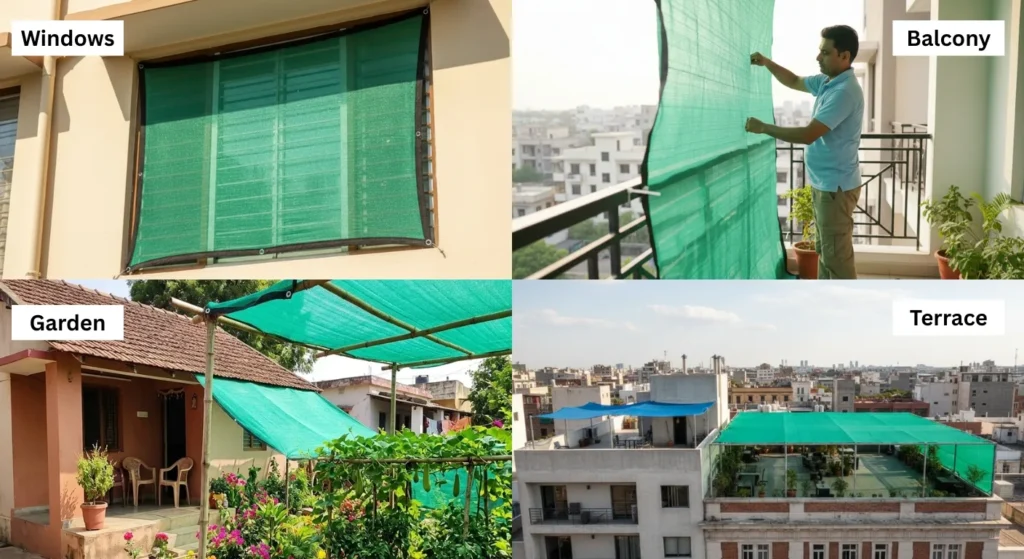
For smaller home applications such as windows and balconies, a properly planned installation can make the net easier to use and maintain.

6. Blocking Airflow Completely

One advantage of many outdoor shade-net solutions is that they can provide shade while still allowing airflow.

This is particularly useful in Indian summer conditions, where simply blocking sunlight is not the only consideration.

When planning a green shade net for balcony or terrace, avoid creating an unnecessarily enclosed space unless the product is specifically designed for that purpose.

Leave suitable open areas where practical so that air can continue moving through the shaded space.

This can make the balcony, terrace, or garden feel more comfortable compared with a completely enclosed arrangement.

7. Choosing the Shade Level Only by Looking at the Number

A higher shade percentage may sound automatically better, but the right choice depends on the application.

A shade net for plants does not necessarily need the same characteristics as one used for a balcony, terrace, car parking area or outdoor sitting space.

Consider the purpose first:

For a home balcony:
Think about sunlight, privacy, airflow, and the time of day when the area becomes hot.

For a terrace:
Consider the size of the area, sun direction, fixing points, and how the shaded space will be used.

For a garden:
Consider the plants and their sunlight requirements rather than choosing a shade level only because it is higher.

For car parking:
Focus on coverage, installation structure, heat and UV exposure, and practical access for the vehicle.

The right shade solution is therefore based on the application, not just one specification.

A Simple Shade Net Installation Checklist

Before installing your shade net, check these points:

  • Measure the complete installation area.
  • Identify suitable fixing points
  • Observe the sun direction
  • Decide which area needs the most shade.
  • Check the required installation angle.
  • Avoid unnecessary tension
  • Maintain practical airflow
  • Choose the shade level according to the application.
  • Check the net and fixing points periodically.
  • Follow the product-specific installation instructions.

Read More: How to Measure a Space for Shade Net Installation? A Practical Guide for Balcony, Terrace & Garden

What About Indian Weather?

Indian outdoor spaces can experience strong sunlight, heat, dust, humidity, seasonal rain, and wind. That means a shade-net installation should be planned according to the local environment and the specific location.

A balcony in Ahmedabad may have different practical requirements from a garden in Bengaluru or a terrace in Delhi. Similarly, a residential installation may be different from a commercial outdoor seating area.

This is why there is no single installation method that is perfect for every home.

Choosing a Shade Net for Your Home

If you are searching for a shade net for home, start with the problem you want to solve.

  • Do you want to reduce direct sunlight on a balcony?
  • Do you want a more comfortable terrace?
  • Do you need shade for a garden?
  • Do you want to cover an outdoor sitting area?
  • Or are you looking for protection for a car parking space?

Once the application is clear, you can select the appropriate size, material, shade level, and installation method.

Trinqet offers green shade-net solutions for different outdoor applications, including balconies, gardens, terraces, and other home spaces. The available product sizes can be selected according to the area and intended use.

Final Thoughts

Installing a shade net is not simply about stretching a net over an outdoor area. Measurement, sun direction, fixing points, tension, airflow, and application-specific requirements all matter.

By avoiding these common installation mistakes, homeowners can plan a more practical and comfortable shaded space.

If you are planning to install a green shade net for your balcony, terrace, garden, or outdoor area, first understand your space and sunlight conditions. Then select a suitable shade solution and install it according to the product’s recommended method.

A well-planned installation can make your shade net more useful, easier to maintain, and better suited to everyday Indian outdoor living.

FAQs

1. Can I install a shade net on my balcony?

Yes. Shade nets can be used for suitable balconies, provided there are appropriate fixing points and the product size matches the space.

2. How do I measure a balcony for a shade net?

Measure the area you want to shade and also check where the net can be safely fixed. Do not measure only the open floor area.

3. Should a shade net be completely tight?

The net should be properly positioned and tensioned according to the product’s installation method. Avoid both excessive looseness and unnecessary tension.

4. Which shade net is suitable for Indian homes?

The suitable option depends on the application, sunlight exposure, required coverage, and installation location. A balcony, garden, and car parking area may require different solutions.

5. Can a shade net reduce heat on a balcony?

A shade net can reduce direct solar exposure and make the shaded area more comfortable. The actual result depends on sunlight, airflow, installation, and surrounding conditions.
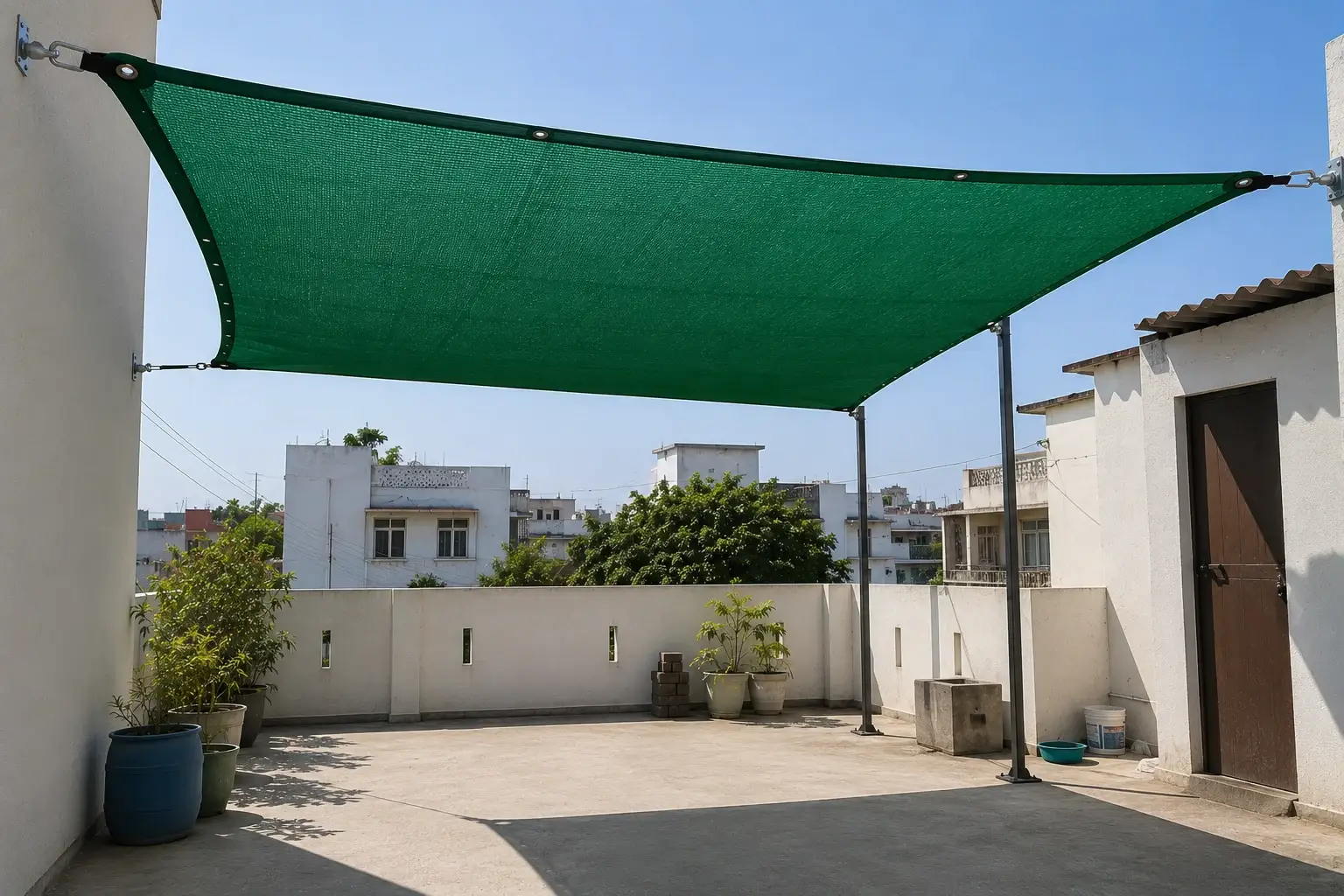
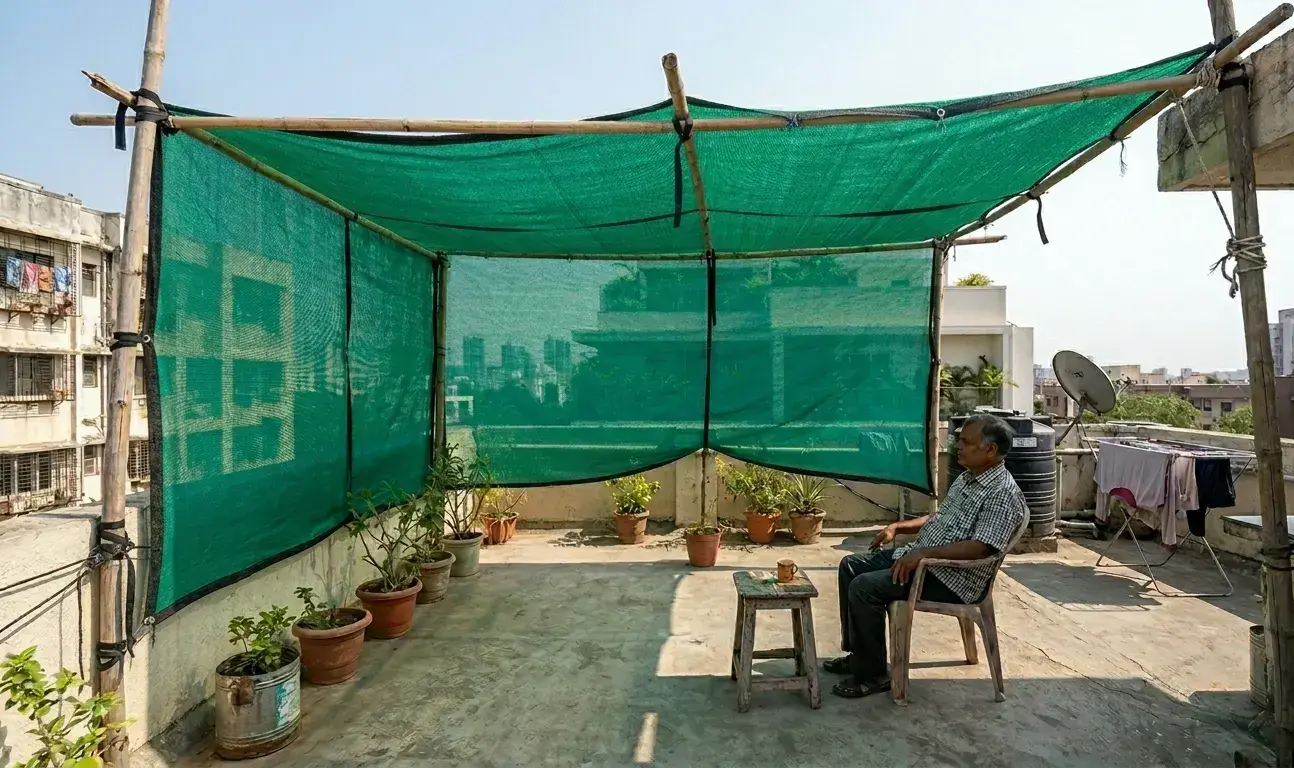
How to Measure a Space for Shade Net Installation? A Practical Guide for Balcony, Terrace & Garden

Choosing the right shade net size starts with one simple step: measuring the space correctly. A net that is too small may leave uncovered areas, while one that is much larger than required can make installation more difficult.

Whether you are planning shade for a balcony, terrace, garden, or another outdoor area, accurate measurements help you choose a practical net size and plan where it will be fixed.

Quick Answer

To measure a space for shade net installation, measure the length and width of the area you want to cover, identify the points where the net will be fixed, and compare your measurements with the available shade-net dimensions. For an irregular space, measure each section separately rather than relying only on total square footage.

Remember that the covered area and the fixing area are not always exactly the same. Your measurement should account for how and where the shade net will actually be installed.

Why Accurate Shade Net Measurement Matters

Before ordering a shade net, it is useful to know exactly how much area you need to cover.

Accurate measurement can help you.

  • Choose a suitable available net size
  • Avoid ordering a net that is too small
  • Plan the fixing points before installation
  • Understand whether the net can be installed wall-to-wall
  • Reduce unnecessary cutting or adjustments
  • Make installation easier and more organised

For this reason, do not measure only by looking at the floor or open area. Think about where the net will start, where it will end and where each corner will be secured.

What You Need Before Measuring

You do not need complicated equipment for a normal residential shade-net measurement.

Keep these items ready:

  • Measuring tape
  • Pen or pencil
  • Paper or phone for recording measurements
  • Ladder, if required for safely checking higher fixing points
  • A simple sketch of the area

For larger terraces or gardens, measuring each side twice can help reduce recording errors.

How to Measure a Rectangular Balcony

For a simple rectangular balcony, start by measuring the length and width of the area where you want the shade net.

For example:

Length = 10 ft
Width = 6 ft

The floor area is:

10 Γ— 6 = 60 sq ft

However, do not stop at the area calculation.

Also check:

  • Where will the four corners be fixed?
  • Are the fixing points at the same height?
  • Is there a wall, railing, or suitable support at each corner?
  • Does the net need to cover the entire opening or only part of it?

This distinction is important because a 10 Γ— 6 ft open area does not automatically mean that every 10 Γ— 6 ft installation will use the same fixing arrangement.

How to Measure a Terrace

Terraces can be more complicated because the available fixing points may not follow the exact boundary of the usable area.

First measure the length and width of the portion that requires shade.

For example:

Terrace section = 15 ft Γ— 10 ft

Then identify the practical fixing locations around that section.

If the net will be stretched between walls, poles, or other suitable supports, record the approximate position of each fixing point. A quick hand-drawn layout can be very useful.

Important tip

Do not measure from an imaginary center point. Measure from the actual points between which the net will be installed.

This gives you a much more useful measurement for installation planning.

How to Measure a Garden Area

Garden spaces may have plants, pathways, walls, or other objects that make the shape less straightforward.

If the area is rectangular, use the same length Γ— width method.

For example:

12 ft Γ— 8 ft = 96 sq ft

If only part of the garden needs shade, measure that specific section instead of measuring the complete garden.

Also check whether the shade net will be:

  • Fixed between existing supports
  • Attached to poles
  • Installed above a selected garden section
  • Spanning between different fixing points

The fixing arrangement can influence which available net dimension is most practical.

How to Measure an Irregular-Shaped Space

Not every outdoor area is a perfect rectangle.

If the space is L-shaped or has different sections, divide it into smaller rectangles.

For example:

Section A: 10 ft Γ— 6 ft
Section B: 6 ft Γ— 4 ft

Calculate each section separately and then combine the measurements.

This is usually more reliable than trying to estimate the entire irregular area as one shape.

If the installation has unusual angles or multiple levels, make a simple sketch and mark every corner and fixing point. This gives you a clearer reference when selecting the net size.

How to Measure Wall-to-Wall Installation

Wall-to-wall installation requires extra attention because the distance between fixing points matters.

Measure:

  • Distance from one fixing point to the opposite fixing point
  • Distance between the other two fixing points
  • Approximate height of each fixing point
  • Any difference in level between opposite sides

For example, suppose two opposite fixing points are approximately 10 ft apart, while the other direction measures 6 ft.

Record it as:

10 ft Γ— 6 ft β€” wall-to-wall fixing

This information is more useful than simply writing β€œ60 sq ft terrace.”

The goal is to understand the actual installation span, not just the mathematical area.

How to Mark Shade Net Fixing Points

Once the dimensions are measured, mark the intended fixing points on your sketch.

For a basic four-corner installation, label them:

A β€” B
D β€” C

Then record the approximate distance between:

  • A and B
  • B and C
  • C and D
  • D and A

If additional support points are planned, mark those as well.

This simple step can prevent a common mistake: ordering the correct area but discovering later that the available fixing arrangement does not match the installation.

For Trinqet shade nets, also consider the reinforced edges and eyelet locations while planning the installation. The fixing method should suit the actual structure and the way the net is intended to be secured.

Common Shade Net Measurement Mistakes

1. Measuring only the floor area

A floor measurement does not always represent the actual installation span.

2. Forgetting the fixing points

Always identify where the net will be attached before finalizing the size.

3. Measuring only once

A small measurement error can become significant when ordering a larger net. Recheck important dimensions.

4. Ignoring irregular sections

Do not force an L-shaped or uneven space into one simple rectangle. Divide it into measurable sections.

5. Confusing area with dimensions

A space of 60 sq ft could have different dimensions, such as 10 Γ— 6 ft or 12 Γ— 5 ft. The area alone does not tell you which net dimensions you need.

Worked Examples

Example 1: 10 Γ— 6 ft Balcony

Measured space:

10 ft Γ— 6 ft

Area:

60 sq ft

Next, check the actual fixing points and compare the dimensions with the available Trinqet sizes.

Example 2: 15 Γ— 10 ft Terrace

Measured space:

15 ft Γ— 10 ft

Area:

150 sq ft

Instead of ordering based only on 150 sq ft, record the actual dimensions and check how the net will be fixed.

Example 3: L-Shaped Garden

Suppose the garden consists of:

Section A: 10 Γ— 6 ft
Section B: 5 Γ— 4 ft

Calculate both sections separately and use the resulting layout to decide how the shade should be arranged.

These examples show why dimensions + fixing points are more useful than area alone.

How to Select the Nearest Trinqet Size After Measuring

After completing the measurements, compare your actual installation dimensions with the available Trinqet shade-net sizes.

Do not select a size simply because its total square footage looks similar.

For example, if your measured area is 60 sq ft, first check the available dimensions that can practically cover the required span and work with your fixing arrangement.

Before placing an order, confirm:

  • Required length
  • Required width
  • Number and position of fixing points
  • Available Trinqet size
  • Whether the selected dimensions suit your installation layout

If you are unsure between two dimensions, keeping your measurement sketch ready can make it easier to determine which option is more suitable for your setup.

Final Measurement Checklist

Before ordering your shade net, check these points:

  • Length measured
  • Width measured
  • Irregular sections measured separately
  • Actual fixing points identified
  • Wall-to-wall distance checked where applicable
  • Measurements recorded in the same unit
  • Dimensions compared with available net sizes
  • Installation layout reviewed before ordering

Final Thoughts

Measuring for a shade net is not difficult, but accurate dimensions and proper fixing-point planning can make the installation much easier.

Start with the length and width, identify the actual fixing points, divide irregular spaces into smaller sections, and compare your measurements with the available Trinqet dimensions.

The key is simple: do not choose a shade net based only on the total area. Measure the actual installation space and plan how the net will be secured.

For buyers comparing shade-net sizes, this approach provides a more practical starting point and helps avoid common sizing mistakes.

Need help choosing the right Trinqet size? Keep your measured length, width and fixing-point layout ready before selecting the shade net for your space.

How Long Does a Shade Net Last? Lifespan, UV Resistance & Maintenance Guide

Introduction

Shade nets are widely used for balconies, terraces, gardens, car parking areas, nurseries, and agricultural applications to provide protection from sunlight, heat, and UV exposure. One of the most common questions buyers ask before purchasing a shade net is: How long does a shade net last outdoors?

The lifespan of a shade net depends on several factors, including material quality, UV stabilization, weather conditions, installation methods, and maintenance practices. A high-quality UV-stabilized HDPE shade net can provide reliable performance for several years when installed and maintained properly.

This guide explains the average lifespan of shade nets, the factors that affect durability, and practical maintenance tips to maximize their service life.

What Is the Average Lifespan of a Shade Net?

The average lifespan of a shade net typically ranges between 3 to 10 years, depending on its quality and usage conditions.

Shade Net QualityExpected Lifespan
Standard Quality Shade Net3–5 Years
UV-Stabilized HDPE Shade Net5–8 Years
Premium Heavy-Duty Shade Net8–10 Years

Premium UV-resistant shade nets are specifically designed to withstand prolonged exposure to sunlight, rain, wind, and varying weather conditions, making them a cost-effective long-term shading solution.

Factors That Affect Shade Net Durability

UV Exposure

Continuous exposure to ultraviolet (UV) rays is one of the biggest factors affecting shade net longevity. Over time, UV radiation can weaken plastic materials, causing fading, brittleness, and tearing.

UV-stabilized shade nets are manufactured with protective additives that help resist UV degradation and significantly extend product life.

Shade Percentage

Different shade percentages may experience varying levels of wear depending on their application and exposure conditions.

  • 35% Shade Net – Typically used for light shading applications.
  • 50% Shade Net – Popular for home gardening and terrace gardens.
  • 75% Shade Net – Suitable for nurseries and sensitive plants.
  • 90% Shade Net – Commonly used for balconies, parking areas, and maximum shade requirements.

Properly selected shade percentages help ensure optimal performance and durability.

Material Quality

The quality of raw materials directly impacts lifespan.

High-density polyethylene (HDPE) shade nets are known for:

  • Excellent durability
  • UV resistance
  • Weather resistance
  • Tear resistance
  • Long-term outdoor performance

Investing in a premium-quality HDPE shade net often results in lower replacement costs over time.

Weather Conditions

Local climate conditions play a significant role in determining shade net life expectancy.

Factors include:

  • Intense summer heat
  • Heavy rainfall
  • Strong winds
  • Dust and pollution
  • Coastal humidity

Areas experiencing extreme weather may require stronger installation systems and periodic inspections.

Installation Method

Improper installation can significantly reduce the lifespan of a shade net.

Common installation issues include:

  • Excessive tension
  • Loose fixing points
  • Poor support structures
  • Uneven load distribution

A properly installed shade net experiences less stress and maintains its structural integrity for a longer period.

How Long Do Different Types of Shade Nets Last?

multiple area shade net  uses

Balcony Shade Nets

Balcony shade nets typically last between 5 and 8 years when installed using proper support systems and UV-resistant materials.

They help reduce heat, glare, and outdoor visibility while improving privacy.

Terrace Shade Nets

Terrace shade nets are constantly exposed to direct sunlight and weather conditions. High-quality UV-stabilized terrace shade nets generally last between 5 and 8 years.

Regular inspections can further improve longevity.

Car Parking Shade Nets

Car parking shade nets often face intense sunlight exposure throughout the day. Premium parking shade nets can provide reliable performance for 5 to 10 years when properly maintained.

Garden Shade Nets

Garden shade nets typically experience moderate stress levels and may last between 4 and 8 years depending on climate conditions and installation quality.

Signs That Your Shade Net Needs Replacement

Over time, shade nets naturally experience wear and tear.

Common signs include:

  • Visible tears or holes
  • Material becoming brittle
  • Fading or discoloration
  • Reduced shading performance
  • Loose or damaged edges
  • Broken fixing points

If multiple signs are present, replacement may be more cost-effective than repeated repairs.

How to Increase the Life of Your Shade Net

Following proper maintenance practices can significantly extend shade net lifespan.

Choose UV-Stabilized HDPE Material

Always select UV-resistant shade nets designed for long-term outdoor use.

Install Proper Support Structures

Use strong frames, cables, hooks, and fasteners to distribute load evenly.

Maintain Proper Tension

Avoid over-tightening the net, as excessive tension can lead to premature tearing.

Inspect Regularly

Check for loose fittings, damaged edges, or small tears and repair them promptly.

Clean Periodically

Remove accumulated dust, leaves, and debris to maintain performance and appearance.

Protect Against Wind Damage

In areas prone to strong winds, use additional support points to reduce stress on the net.

Common Mistakes That Reduce Shade Net Lifespan

Many users unknowingly shorten the life of their shade nets through improper practices.

Avoid these common mistakes:

  • Purchasing low-quality non-UV-stabilized nets
  • Installing without adequate support structures
  • Ignoring small tears and damages
  • Overstretching the net during installation
  • Using incorrect fixing accessories
  • Failing to perform periodic maintenance

Preventing these mistakes can add years to the service life of a shade net.

Frequently Asked Questions

How long does a UV-stabilized shade net last?

A high-quality UV-stabilized HDPE shade net can typically last between 5 and 10 years under normal outdoor conditions.

Does sunlight damage shade nets?

Continuous UV exposure can gradually weaken shade nets. UV-stabilized products are specifically designed to resist sunlight damage and maintain durability.

Which shade net lasts the longest?

Premium UV-resistant HDPE shade nets generally provide the longest lifespan and best outdoor performance.

How can I increase the lifespan of my shade net?

Proper installation, regular inspections, cleaning, and the use of UV-stabilized materials can significantly improve shade net longevity.

Is a premium shade net worth the investment?

Yes. Premium-quality shade nets typically last longer, provide better UV protection, and reduce replacement costs over time.

Conclusion

The lifespan of a shade net depends on its material quality, UV resistance, installation method, and environmental conditions. While standard shade nets may last 3 to 5 years, premium UV-stabilized HDPE shade nets can provide reliable performance for 5 to 10 years or more.

Choosing a high-quality shade net and following proper maintenance practices can help maximize durability, improve outdoor comfort, and deliver long-term value for balconies, terraces, gardens, parking areas, and commercial spaces.

How Swimming Pool Shade Sails Enhance Comfort and UV Protection?

A swimming pool is the perfect place to relax, cool off, and enjoy outdoor fun. However, prolonged sun exposure can make pool time uncomfortable and even harmful. Installing swimming pool shade sails is a smart way to create a more enjoyable and protected swimming environment.

The Importance of Sun Protection for Pools

Excessive exposure to UV rays can lead to sunburns, premature aging, and even increase the risk of skin cancer. By adding a shade sail over the pool, you significantly reduce these risks while keeping the water cooler and more refreshing. Swimming pool shade sails are a must-have for homeowners who want to enjoy their pools safely and comfortably.

How Swimming Pool Shade Sails Improve Comfort

  1. Cooler Pool Water: Sun sails over the pool help lower water temperatures, making swimming more refreshing, especially during hot summer days.
  2. Extended Swim Time: With pool sun shade sails, you can enjoy your pool longer without worrying about excessive sun exposure.
  3. Reduced Glare: Swimming pool shade covers minimize glare from the sun, making the pool area more relaxing for swimmers and those lounging poolside.
  4. Enhanced Aesthetic Appeal: Modern sun sails for pools come in various designs, colors, and sizes, adding a stylish touch to your outdoor space.
swimming pool shade sails

Why Choose Trinqet for Your Swimming Pool Shade Sails?

At Trinqet, we offer high-quality swimming pool sail shades designed for durability and maximum sun protection. Our sun shades over pools are made from UV-resistant materials that not only provide excellent shade but also withstand harsh weather conditions.

Benefits of Our Shade Sails for Swimming Pools:

  • UV Protection: Blocks up to 98% of harmful UV rays.
  • Durability: Made from premium, weather-resistant fabrics.
  • Customizable Designs: Available in various shapes and colors to complement any pool area.
  • Easy Installation: Simple setup with sturdy anchor points for long-lasting support.

Final Thoughts

Additionally, investing in shade sails over swimming pools is an excellent way to enhance your pool experience. Whether you need a shade sail for swimming pools to keep the water cool, protect your skin, or elevate your backyard aesthetics, Trinqet has the perfect solution.

So, upgrade your pool area today with our premium swimming pool sails and enjoy comfort, style, and superior UV protection.

So, explore our collection now at Trinqet and transform your poolside into a shaded paradise!

FAQs :

1. Why should I install shade sails over a swimming pool?

Swimming pool shade sails help reduce direct sunlight, improve comfort, block harmful UV rays, and create a cooler poolside environment for relaxing and swimming safely.

2. Do swimming pool shade sails really protect from UV rays?

Yes, high-quality HDPE shade sails can block up to 90–98% harmful UV rays, helping protect skin from sun exposure while keeping the pool area cooler.

3. Are pool shade sails waterproof and weather resistant?

Most premium pool shade sails are weather-resistant and designed to handle strong sunlight, wind, and light rain for long-term outdoor use.

4. Can shade sails keep swimming pool water cooler in summer?

Yes, shade sails reduce direct heat exposure on the pool surface, which helps maintain cooler and more comfortable water temperatures during hot summer days.

5. Which material is best for swimming pool shade sails?

UV-stabilized HDPE fabric is considered one of the best materials for pool shade sails because it offers durability, airflow, heat reduction, and long-lasting UV protection.

Which Shade Net is Best for Your Home? Complete Comparison Guide

🏑 Introduction: Choosing the Right Shade Net Isn’t as Simple as It Seems

With rising temperatures across India, more homeowners are turning to shade net for home cooling. Whether it’s your balcony, terrace, windows, or gardenβ€”shade nets have become a smart and affordable solution.

But here’s the confusion most people face:

πŸ‘‰ Which shade net is actually best for my home?

πŸ‘‰ Should I choose 75% or 90%? Green or black?

πŸ‘‰ Which one works best for Indian summers?

If you pick the wrong shade net, you may still face heat, poor airflow, or short lifespan.

That’s why this guide will help you:

  • Compare different types of shade nets
  • Understand which one suits your needs
  • Make a smart buying decision

🌿 What is a Shade Net & Why It Matters

A shade net is a woven fabric made from HDPE (High-Density Polyethylene) that blocks sunlight and reduces heat.

It is widely used for:

  • Balcony cooling
  • Terrace protection
  • Window heat reduction
  • Garden shading

πŸ‘‰ The main goal is simple:

Reduce heat while maintaining airflow

πŸ”₯ Why Choosing the Right Shade Net is Important

Not all shade nets are the same.

Choosing the wrong one can lead to:

  • Insufficient heat reduction
  • Poor airflow
  • Faster wear and tear

πŸ‘‰ The right shade net improves:

  • Indoor comfort
  • Energy efficiency
  • Overall living experience

πŸ“Š Shade Net Comparison: 75% vs 90%

This is the most common confusion.

πŸ”’ 75% Shade Net

  • Blocks moderate sunlight
  • Allows more light and airflow
  • Suitable for mild heat areas

πŸ”’ 90% Shade Net

  • Blocks maximum sunlight
  • Best for strong heat
  • Ideal for Indian summers

πŸ‘‰ Best Choice:

For most Indian homes, especially west-facing balconies:

βœ… 90% shade net for heat reduction

🎨 Color Comparison: Green vs Black Shade Net

🟒 Green Shade Net

  • Most popular for residential use
  • Balanced heat reduction
  • Comfortable natural light

⚫ Black Shade Net

  • Blocks more sunlight
  • Better for extreme heat
  • Slightly reduces brightness

πŸ‘‰ Best Choice:

  • For homes β†’ Green shade net
  • For high heat areas β†’ Black shade net

🏠 Best Shade Net Based on Usage Area

shade net

🏑 Balcony Shade Net

πŸͺŸ Window Shade Net

  • Blocks direct sunlight
  • Maintains airflow
  • Best for small spaces

🏒 Terrace Shade Net

  • Prevents roof heating
  • Makes terrace usable

🌿 Garden Shade Net

  • Protects plants from harsh sunlight

⚑ UV Protection Shade Net vs Normal Shade Net

FeatureUV Protection NetNormal Net
Heat ReductionHighMedium
Durability3–5 yearsLower
UV BlockingStrongWeak

πŸ‘‰ Always choose UV protection shade net for better performance.

πŸ’‘ Key Factors to Choose the Best Shade Net

βœ… 1. Sun Direction

West-facing homes need stronger shade

βœ… 2. Shade Percentage

  • 75% β†’ Moderate
  • 90% β†’ Strong heat

βœ… 3. Material Quality

Always choose:

  • HDPE
  • UV stabilized

βœ… 4. Size & Coverage

Measure properly for full coverage

βœ… 5. Installation Type

Eyelets, ropes, or hooks

πŸ›’ Buying Guide: What to Look for

  • Strong stitching
  • UV resistance
  • Weather durability
  • Easy installation

πŸ‘‰ Avoid very cheap productsβ€”they don’t last long.

πŸ› οΈ Installation Tips for Best Results

  • Install outside (not inside)
  • Keep slight angle
  • Ensure tight fitting
  • Maintain airflow gaps

πŸ‘‰ Proper installation = better cooling

πŸ’° Shade Net Price in India

Prices vary based on quality and size.

Average Range:

  • Small: β‚Ή500–₹1500
  • Medium: β‚Ή1500–₹3000
  • Large: β‚Ή3000+

πŸ‘‰ Buying shade net online India gives better variety.

⚠️ Common Mistakes to Avoid

  • Choosing wrong shade percentage
  • Ignoring sun direction
  • Buying low-quality material
  • Loose installation

πŸ‘‰ These reduce effectiveness.

πŸ“ Why Shade Nets Are Ideal for Indian Homes

India’s climate includes:

  • High UV levels
  • Long summers
  • Compact homes

πŸ‘‰ Shade nets are:

βœ” Affordable

βœ” Easy to install

βœ” Highly effective

βœ” Long-lasting

❓ FAQs

Q1: Which shade net is best for home?

90% UV protection shade net is best for Indian conditions.

Q2: Which color shade net is better?

Green for general use, black for extreme heat.

Q3: Does shade net reduce indoor temperature?

Yes, by blocking sunlight before it enters.

Q4: How long does it last?

3–5 years with good quality material.

🎯 Final Conclusion: Choose Smart, Stay Cool

Choosing the right shade net is not just about buyingβ€”it’s about understanding your needs.

πŸ‘‰ Best overall recommendation:

  • 90% UV protection shade net
  • Green color for homes
  • Proper installation

This combination gives:

  • Maximum cooling
  • Good airflow
  • Long durability

πŸš€ Final Call to Action

Don’t let heat control your home.

πŸ‘‰ Choose the best shade net for home and enjoy a cooler, more comfortable lifestyle.

Shade Net for Windows: Reduce Heat Without Blocking Airflow

🏑 Introduction: The Window Heat Problem Every Indian Home Faces

In most Indian homes, windows are the biggest source of natural lightβ€”and unfortunately, unwanted heat too. During summer, especially in cities like Rajkot, Ahmedabad, or Delhi, sunlight directly enters through windows for hours. This leads to:

  • Rooms heating up quickly
  • Uncomfortable indoor temperature
  • Increased AC usage
  • Higher electricity bills

Many homeowners try curtains, blinds, or window films. But here’s the problem:

πŸ‘‰ Curtains block air.

πŸ‘‰ Blinds trap heat.

πŸ‘‰ Films reduce light but not airflow.

So what’s the smart solution?

πŸ‘‰ Using a shade net for windows β€” a simple yet effective way to reduce heat without blocking airflow.

πŸ”₯ Why Windows Make Your Home Hot

Let’s understand the real reason behind overheating.

β˜€οΈ 1. Direct Sunlight Entry

Windows allow sunlight to enter directly into your home.

πŸͺŸ 2. Glass Amplifies Heat

Glass doesn’t just let light inβ€”it also traps heat, creating a greenhouse effect.

🧱 3. Heat Absorption

Floors and furniture absorb heat and release it slowly.

πŸ‘‰ Result: Even after sunset, your room remains warm.

🌿 What is a Shade Net for Windows?

A shade net for windows is a breathable, UV-resistant fabric made from HDPE (High-Density Polyethylene).

It is installed outside your window to:

  • Block harsh sunlight
  • Reduce heat entry
  • Maintain natural airflow

πŸ‘‰ Think of it as a β€œfilter” for sunlightβ€”not a complete blocker.

🧠 How Shade Nets Reduce Heat Without Blocking Airflow

This is what makes shade nets different from other solutions.

πŸ” Simple Working:

1. Sunlight Hits the Net First

Instead of entering directly, sunlight passes through the net.

2. Heat Intensity Reduces

The net filters and diffuses sunlight.

3. Air Passes Freely

Since the net is porous, air continues to flow.

πŸ‘‰ Result:

  • Cooler room
  • Fresh air circulation
  • Comfortable environment

⚑ Why Shade Nets Are Better Than Curtains or Blinds

Let’s compare:

FeatureShade NetCurtainsBlinds
Heat ReductionHighLowMedium
AirflowYesNoLimited
Outdoor UseYesNoNo
DurabilityLongMediumMedium

πŸ‘‰ Shade nets win because they balance heat control and airflow

πŸ’‘ Key Benefits of Window Shade Nets

window shade net

🌑️ 1. Reduces Indoor Temperature

Blocks a large portion of sunlight before it enters.

πŸ’Έ 2. Saves Electricity

Less heat means less AC usage.

🌬️ 3. Maintains Ventilation

Fresh air continues to flow naturally.

πŸ›‘οΈ 4. UV Protection

Prevents damage to furniture, curtains, and flooring.

🏑 5. Improves Comfort

Rooms stay cooler and more usable during the day.

🏠 Types of Shade Nets for Windows

🟒 Green Shade Net

  • Most common for homes
  • Provides natural cooling effect

⚫ Black Shade Net

  • Blocks more sunlight
  • Suitable for very hot areas

πŸ“Š 75% vs 90% Shade Net

  • 75% β†’ Balanced light and airflow
  • 90% β†’ Maximum heat reduction

πŸ‘‰ For Indian summers, 90% shade net for windows is recommended.

πŸ›’ How to Choose the Best Shade Net for Windows

window shade net

βœ… 1. Check Sun Direction

West-facing windows need stronger protection.

βœ… 2. Choose Quality Material

Always go for:

  • HDPE shade net
  • UV stabilized fabric

βœ… 3. Select Correct Size

Ensure full coverage of window area.

βœ… 4. Easy Installation

Look for eyelets or hook options.

βœ… 5. Durability

A good shade net lasts 3–5 years.

πŸš€ Best Use Cases for Window Shade Nets

window shade net

🏑 Living Rooms

Reduce heat and glare

πŸ›οΈ Bedrooms

Improve comfort during daytime

🏒 Office Spaces

Maintain cooler working environment

🌿 Indoor Plants

Protect from harsh sunlight

πŸ› οΈ Installation Tips for Maximum Effectiveness

  • Install on the outside of the window
  • Keep slight gap for airflow
  • Ensure tight fitting
  • Use hooks or ropes for support

πŸ‘‰ Proper installation improves performance significantly.

πŸ’° Shade Net Price in India

Prices depend on:

  • Size
  • Quality
  • Shade percentage

Average Range:

  • Small window β†’ β‚Ή300–₹800
  • Medium β†’ β‚Ή800–₹2000
  • Large/custom β†’ β‚Ή2000+

πŸ‘‰ Buying shade net online India gives better options.

⚠️ Common Mistakes to Avoid

  • Using indoor solutions only
  • Choosing low-quality nets
  • Wrong shade percentage
  • Loose installation

πŸ‘‰ These reduce effectiveness.

πŸ“ Why Window Shade Nets Are Perfect for Indian Homes

India’s climate demands smart solutions:

  • High UV exposure
  • Long summers
  • Compact spaces

πŸ‘‰ Shade nets are:

βœ” Affordable

βœ” Easy to install

βœ” Highly effective

βœ” Long-lasting

❓ FAQs:

Q1: Can shade nets reduce heat from windows?

Yes, they block sunlight before it enters, reducing heat.

Q2: Do they block airflow?

No, they allow proper ventilation.

Q3: Which shade net is best for windows?

90% UV protection shade net is ideal.

Q4: Are they better than curtains?

Yes, for heat reduction and airflow.

🎯 Final Conclusion: Smart Cooling Without Compromise

If your windows are making your home hot, the solution is not to block everythingβ€”it’s to filter it smartly.

πŸ‘‰ Shade nets offer the perfect balance:

  • Reduce heat
  • Allow airflow
  • Improve comfort

πŸš€ Final Call to Action

Stop letting window heat control your home.

πŸ‘‰ Install a shade net for windows and enjoy a cooler, more comfortable living space.

Balcony Heat Problem? Best Shade Net Solutions in India

🏑 Introduction: Why Your Balcony Turns Into a Heat Zone

If your balcony becomes unusable during summer, you’re not alone. Across Indiaβ€”especially in cities like Rajkot, Ahmedabad, and Mumbaiβ€”balconies face direct sunlight for long hours.

By afternoon, many homes experience:

  • Hot floors and walls
  • Strong sunlight entering rooms
  • Increased indoor temperature
  • Continuous AC usage

You might have tried curtains or blinds, but they often block air and still don’t reduce heat effectively.

πŸ‘‰ The real issue is not sunlight itself β€” it’s uncontrolled sunlight entering your home.

And the most effective solution?

Using the right shade net for balcony cooling

πŸ”₯ What Causes Balcony Heat in Indian Homes?

Before solving the problem, let’s understand it properly.

β˜€οΈ 1. Direct Sunlight Exposure

Balconies receive 5–8 hours of sunlight daily, especially west-facing ones.

🧱 2. Heat Absorption by Surfaces

Concrete floors and walls store heat and release it slowly.

πŸͺŸ 3. Glass Door Effect

Heat gets trapped inside, increasing room temperature.

πŸ‘‰ This combination makes your home feel hotter even in the evening.

🌿 What is a Shade Net & Why It Works

A shade net is a specially designed fabric made from HDPE (High-Density Polyethylene) that blocks sunlight while allowing airflow.

🧠 Simple Working:

  • Filters harsh sunlight
  • Reduces heat intensity
  • Allows air circulation

πŸ‘‰ Result: A cooler and more comfortable balcony and home

⚑ Why Shade Nets Are the Best Balcony Cooling Solution

Most indoor solutions work after heat enters your home.

But shade nets work before heat enters.

Comparison:

SolutionHeat ControlAirflow
CurtainsLowNo
BlindsMediumLimited
Shade NetHighYes

πŸ‘‰ This is why balcony shade net India demand is growing rapidly.

🏠 Types of Shade Net Solutions for Balcony

🟒 1. Green Shade Net

  • Most popular for home use
  • Provides natural cooling
  • Ideal for balconies and plants

⚫ 2. Black Shade Net

  • Blocks more sunlight
  • Suitable for extreme heat areas

πŸ”Ί 3. Shade Sail (Modern Option)

  • Stylish triangular design
  • Best for decorative balconies

πŸ“Š 75% vs 90% Shade Net – Which One is Better?

Choosing the right percentage is important.

  • 75% Shade Net β†’ Allows some sunlight, moderate cooling
  • 90% Shade Net β†’ Maximum heat reduction

πŸ‘‰ For Indian summers, especially west-facing balconies,

90% shade net for balcony is the best choice

πŸ’‘ Key Benefits of Using Shade Nets

Best Shade Net Solutions in India

🌑️ 1. Reduces Heat Naturally

Helps lower balcony temperature significantly

πŸ’Έ 2. Saves Electricity

Less need for AC and fans

🌬️ 3. Maintains Airflow

Keeps fresh air flowing

πŸ›‘οΈ 4. UV Protection

Protects furniture and flooring

🌿 5. Multi-purpose Use

Works for balcony, terrace, garden, and more

πŸ›’ How to Choose the Best Shade Net for Your Balcony

Making the right choice ensures better results.

βœ… 1. Check Sun Direction

West-facing balconies need stronger protection

βœ… 2. Choose Material

Always go for:

βœ… 3. Select Right Size

Measure your balcony properly

βœ… 4. Installation Type

  • Eyelets (best)
  • Rope
  • Hook system

βœ… 5. Durability

Good nets last 3–5 years

πŸš€ Best Use Cases of Shade Nets

Best Shade Net Solutions in India

🏑 Balcony Cooling

Reduces heat entering your home

🌿 Plant Protection

Prevents plant damage

πŸš— Car Parking

Keeps vehicles cool

🏒 Terrace Use

Makes outdoor space usable

πŸ› οΈ Installation Tips for Maximum Cooling

  • Install on the outer side
  • Keep slight angle
  • Ensure tight fitting
  • Maintain airflow gaps

πŸ‘‰ Proper installation improves cooling performance.

πŸ’° Shade Net Price in India

Prices depend on size and quality.

Average Range:

  • Small: β‚Ή500–₹1500
  • Medium: β‚Ή1500–₹3000
  • Large: β‚Ή3000+

πŸ‘‰ Buying shade net online India gives better options.

⚠️ Common Mistakes to Avoid

  • Buying low-quality nets
  • Choosing wrong percentage
  • Loose installation
  • Ignoring sunlight direction

πŸ‘‰ These reduce effectiveness.

πŸ“ Why Shade Nets Are Perfect for Indian Climate

India has:

  • High UV exposure
  • Long summers
  • Compact homes

πŸ‘‰ Shade nets are:

βœ” Affordable

βœ” Durable

βœ” Easy to install

βœ” Highly effective

❓ FAQs

Q1: Which shade net is best for balcony heat?

90% UV protection shade net is best.

Q2: Does shade net reduce indoor temperature?

Yes, by blocking sunlight before it enters.

Q3: Can it block rain?

It reduces light rain but is not waterproof.

Q4: How long does it last?

3–5 years with good quality material.

🎯 Final Conclusion: Turn Your Hot Balcony Into a Comfortable Space

Balcony heat is a common problemβ€”but it has a simple solution.

πŸ‘‰ Instead of trying to cool your home from inside, stop the heat from entering in the first place

Shade nets help you:

  • Reduce heat
  • Save electricity
  • Improve comfort

πŸš€ Final Call to Action

If your balcony becomes too hot in summer, it’s time to upgrade.

πŸ‘‰ Choose a high-quality shade net for balcony and enjoy a cooler, more comfortable home.

How UV Protection Shade Nets Work

🌞 Introduction: Why UV Protection Matters More Than You Think

In India, sunlight is not just brightβ€”it’s intense. Especially during summer, the sun brings not only heat but also harmful UV (ultraviolet) rays that can affect your home, your comfort, and even your health.

If your balcony, terrace, or rooms receive direct sunlight for long hours, you may notice:

  • Rooms heating up quickly
  • Furniture fading over time
  • Increased AC usage and electricity bills
  • Uncomfortable glare during the day

Many people try curtains or blinds, but these only block lightβ€”not UV heat effectively.

πŸ‘‰ This is where UV protection shade nets come in as a smart, practical solution.

In this guide, you’ll learn:

  • What UV protection shade nets are
  • How they actually work
  • How much protection they provide

β˜€οΈ Understanding UV Rays: The Hidden Cause of Heat

Before we understand shade nets, let’s quickly understand UV rays.

Sunlight contains:

  • Visible light (what we see)
  • Infrared rays (heat)
  • Ultraviolet (UV) rays (harmful radiation)

πŸ‘‰ UV rays are responsible for:

  • Heating surfaces
  • Damaging furniture and fabrics
  • Causing skin damage

In Indian cities, UV levels are often very high, especially in open balconies and terraces.

🌿 What is a UV Protection Shade Net?

A UV protection shade net is a specially designed fabric made from HDPE (High-Density Polyethylene) that is treated to resist UV rays.

It is installed in outdoor areas like:

  • Balconies
  • Terraces
  • Windows
  • Gardens

πŸ‘‰ Its main job is to filter sunlight and reduce UV exposure while allowing airflow.

🧠 How UV Protection Shade Nets Work

This is the most important part.

πŸ” Step-by-Step Working:

1. Sunlight Hits the Net

Instead of directly hitting your balcony or window, sunlight first touches the shade net.

2. UV Rays Get Filtered

The net blocks a significant portion of UV rays depending on its density.

3. Heat Intensity Reduces

Less UV = less heat absorption by surfaces.

4. Air Still Passes Through

Unlike solid materials, shade nets allow ventilation.

πŸ‘‰ Result:

  • Cooler surroundings
  • Reduced glare
  • Comfortable living space

πŸ§ͺ The Science Behind UV Protection Shade Nets

Shade nets are not just clothβ€”they are engineered materials.

They work based on:

🌞 Reflection

Some sunlight is reflected away from your home

🌿 Absorption

Some heat is absorbed by the net itself

🌬️ Diffusion

Remaining light is spread out (softened)

πŸ‘‰ This combination reduces the intensity of sunlight entering your home.

πŸ“Š How Much UV Protection Do Shade Nets Provide?

Different shade nets offer different levels of protection.

πŸ”’ UV Blocking Capacity:

  • 50% Shade Net β†’ Blocks ~50% sunlight
  • 75% Shade Net β†’ Blocks ~70–75% UV rays
  • 90% Shade Net β†’ Blocks up to 90% UV rays

πŸ‘‰ For Indian conditions, 90% UV protection shade net is the most effective.

⚑ Benefits of UV Protection Shade Nets

🌑️ 1. Reduces Heat Effectively

Less UV exposure = lower temperature

πŸ’Έ 2. Saves Electricity

Less AC usage means lower bills

🌬️ 3. Maintains Natural Airflow

Unlike curtains, air can circulate freely

πŸ›‘οΈ 4. Protects Interiors

Prevents fading of furniture, curtains, and flooring

🌿 5. Better for Plants

Protects plants from harsh sunlight

🏠 Where Should You Use UV Protection Shade Nets?

UV Protection Shade Nets

🏑 Balcony

Most effective place to block sunlight entering your home

🏒 Terrace

Prevents roof heating

πŸͺŸ Windows

Reduces direct sunlight and glare

🌿 Garden

Protects plants from UV damage

βš–οΈ UV Protection Shade Net vs Normal Shade Net

FeatureUV Protection NetNormal Net
UV ResistanceHighLow
Heat ReductionBetterModerate
Durability3–5 yearsLess
PerformanceConsistentWeak over time

πŸ‘‰ Always choose UV stabilized shade net for long-term use.

πŸ›’ How to Choose the Best UV Protection Shade Net

UV Protection Shade Nets

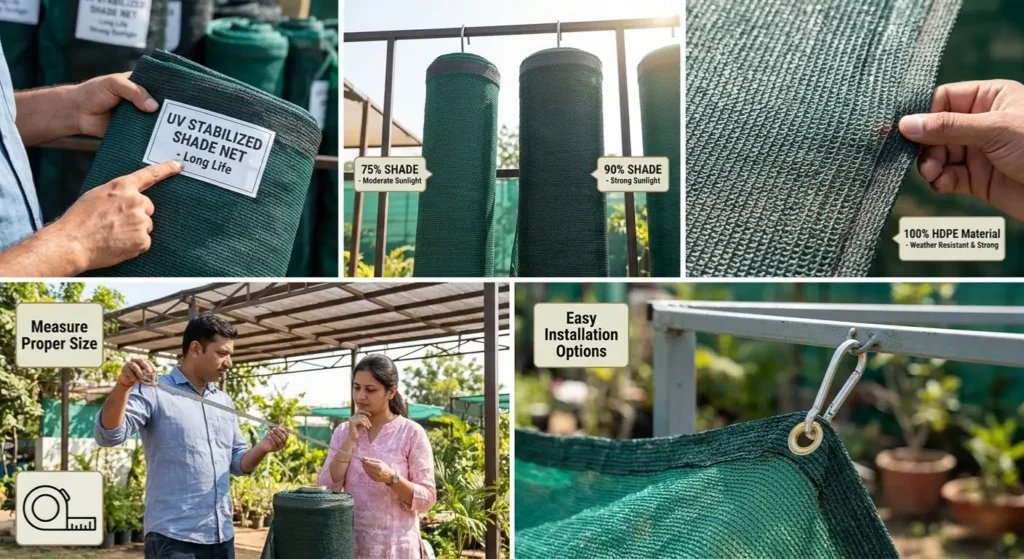
βœ… 1. Check UV Stabilization

Make sure it is labeled UV stabilized

βœ… 2. Choose Right Shade Percentage

  • 75% β†’ moderate sunlight
  • 90% β†’ strong sunlight

βœ… 3. Look for HDPE Material

Strong and weather-resistant

βœ… 4. Measure Proper Size

Avoid gaps or loose fitting

βœ… 5. Easy Installation Options

Eyelets or hooks are best

πŸ› οΈ Installation Tips for Maximum Effect

  • Install on the outer side
  • Keep slight angle for better sun blocking
  • Ensure tight fitting
  • Maintain small airflow gaps

πŸ‘‰ Proper installation improves performance significantly.

πŸ’° Price of UV Protection Shade Nets in India

Prices vary based on quality and size.

Average Price:

  • Small: β‚Ή500–₹1500
  • Medium: β‚Ή1500–₹3000
  • Large/custom: β‚Ή3000+

πŸ‘‰ Buying shade net online India gives better options.

⚠️ Common Mistakes to Avoid

  • Choosing non-UV nets
  • Buying very cheap quality
  • Installing loosely
  • Ignoring sun direction

πŸ‘‰ These reduce effectiveness.

πŸ“ Why UV Shade Nets Are Ideal for Indian Homes

India has:

  • High UV index
  • Long summer season
  • Compact living spaces

πŸ‘‰ UV protection shade nets are:

βœ” Affordable

βœ” Durable

βœ” Highly effective

❓ FAQs:

Q1: Do UV protection shade nets really work?

Yes, they block a significant amount of UV rays and reduce heat.

Q2: Which shade net is best for UV protection?

90% UV stabilized shade net is best.

Q3: Can it reduce indoor temperature?

Yes, by reducing heat entry.

Q4: How long does it last?

3–5 years with good quality material.

🎯 Final Conclusion: A Smart Way to Control Sunlight

UV rays are one of the main reasons behind heat and discomfort in homes.

Instead of only using indoor solutions, it’s smarter to control sunlight outside.

πŸ‘‰ UV protection shade nets offer an easy, effective, and affordable solution

They help you:

  • Reduce heat
  • Protect interiors
  • Improve comfort
  • Save energy

πŸš€ Final Call to Action

If your home gets too much sunlight, don’t wait.

πŸ‘‰ Choose a high-quality UV protection shade net and create a cooler, more comfortable living space.

Do Shade Nets Really Reduce Heat?

🌞 Introduction: The Big Question Every Homeowner Asks

With rising temperatures across India, one question is becoming very common:

πŸ‘‰ β€œDo shade nets really reduce heat, or is it just marketing?”

If your balcony, terrace, or rooms get extremely hot during summer, you’ve probably considered installing a shade net for heat reduction. But before investing, you want to be sure:

  • Does it actually work?
  • How much heat can it reduce?
  • Is it better than curtains or blinds?

In this guide, we’ll break down the real science, practical benefits, and smart usage of shade nets β€” in a simple and honest way.

πŸ”₯ Understanding Heat: Where Does It Actually Come From?

Before answering the main question, let’s understand the root cause.

In Indian homes, heat mainly comes from:

β˜€οΈ 1. Direct Sunlight

Sun rays hit your balcony, terrace, and windows for hours.

🧱 2. Surface Heat Absorption

Walls and floors absorb heat and slowly release it inside.

πŸͺŸ 3. Glass Heat Trap

Windows trap heat, increasing indoor temperature.

πŸ‘‰ This is why your home feels hot even after sunset.

🌿 What is a Shade Net?

A shade net is a woven fabric made from HDPE (High-Density Polyethylene) designed to block a certain percentage of sunlight.

It is widely used in:

  • Balconies
  • Terraces
  • Gardens
  • Car parking areas

πŸ‘‰ Its main purpose is sunlight control and heat reduction

🧠 So… Do Shade Nets Really Reduce Heat?

βœ… Short Answer: YES, they do.

But let’s understand how and how much.

Shade nets don’t completely eliminate heat β€” they reduce the amount of heat entering your home.

πŸ‘‰ Think of it like sunglasses for your house.

πŸ§ͺ The Science Behind Shade Nets

🌞 Without Shade Net:

  • Direct sunlight hits surfaces
  • Heat gets absorbed
  • Temperature increases rapidly

🌿 With Shade Net:

  • Sunlight gets filtered
  • Heat intensity reduces
  • Surfaces absorb less heat

πŸ‘‰ This leads to a cooler environment.

πŸ“Š How Much Heat Can a Shade Nets Reduce?

This depends on the type and percentage of the net.

πŸ”’ General Heat Reduction:

  • 50% Shade Net β†’ Mild heat reduction
  • 75% Shade Net β†’ Moderate cooling
  • 90% Shade Net β†’ High heat reduction

πŸ‘‰ In Indian conditions, a 90% shade net can reduce heat by 5Β°C to 10Β°C in outdoor areas.

And indirectly:

  • Indoor temperature also drops
  • Cooling becomes faster

⚑ Why Shade Nets Work Better Than Indoor Solutions

Most people use:

  • Curtains
  • Blinds
  • Window films

But these solutions work after heat enters your home.

πŸ‘‰ Shade nets work before heat enters

Comparison:

SolutionHeat Control
CurtainsLow
BlindsMedium
Shade NetHigh

πŸ‘‰ This is why outdoor shade net solutions are more effective.

πŸ’‘ Key Benefits of Shade Nets for Heat Reduction

shade nets

🌑️ 1. Reduces Temperature Naturally

Helps control heat without electricity

πŸ’Έ 2. Saves Energy

Less AC usage = lower electricity bills

🌬️ 3. Maintains Airflow

Allows fresh air to circulate

πŸ›‘οΈ 4. UV Protection

Protects furniture and interiors

🌿 5. Multi-purpose Use

Works for balcony, terrace, garden, and more

🏠 Where Should You Use Shade Nets for Best Results?

🏑 Balcony

Reduces heat entering living rooms

🏒 Terrace

Prevents roof heating

πŸͺŸ Windows

Blocks direct sunlight

πŸš— Car Parking

Reduces heat around home

πŸ“Š Choosing the Right Shade Nets for Heat Reduction

75% vs 90% Shade Net

  • 75% β†’ Good for light sunlight
  • 90% β†’ Best for extreme heat

πŸ‘‰ For Indian summers, 90% shade net is ideal.

πŸ›’ What to Look for When Buying a Shade Nets

βœ… Material

Always choose:

  • HDPE
  • UV stabilized

βœ… Durability

Should last at least 3–5 years

βœ… Installation

Easy to fix with eyelets or hooks

βœ… Size

Measure properly before buying

πŸ› οΈ Installation Tips for Maximum Cooling

  • Install on outer side
  • Keep slight angle
  • Ensure tight fitting
  • Maintain airflow gaps

πŸ‘‰ Proper installation improves effectiveness by 20–30%

πŸ“ Why Shade Nets Are Ideal for Indian Homes

India’s climate demands smart solutions:

  • High UV exposure
  • Long summers
  • Compact spaces

πŸ‘‰ Shade nets are:

βœ” Affordable

βœ” Easy to install

βœ” Highly effective

❓ FAQs

Q1: Do shade nets really reduce heat?

Yes, they reduce heat by blocking and filtering sunlight.

Q2: How much temperature can they reduce?

Up to 5–10Β°C depending on quality and usage.

Q3: Which shade net is best?

90% UV protection shade net for Indian summers.

Q4: Are they better than curtains?

Yes, for heat control, they are more effective.

🎯 Final Conclusion: A Practical and Proven Cooling Solution

So, do shade nets really reduce heat?

πŸ‘‰ Yes β€” and quite effectively.

They may not replace AC completely, but they:

  • Reduce heat entry
  • Improve comfort
  • Lower cooling costs

πŸ‘‰ The smartest approach is:

Stop heat before it enters your home

πŸš€ Final Call to Action

If your home gets too hot during summer, don’t wait.

πŸ‘‰ Install a high-quality shade net for heat reduction and experience the difference yourself.

Is Your Home Overheating? Try These Outdoor Shade Net Solutions

🌞 Introduction: When Your Home Feels Hot Even Without Stepping Outside

You switch on the fan. Still hot.

You turn on the AC. It cools for a while… then again the heat comes back.

If this sounds familiar, your home is not the problem β€” your heat control strategy is.

In many Indian homes, especially in cities like Rajkot, Ahmedabad, Mumbai, and Delhi, overheating is a common issue during summer. The real reason is simple:

πŸ‘‰ Too much direct sunlight entering your home

And most people try to fix this from inside using curtains or AC, while the heat is actually entering from outside.

πŸ’‘ The smart solution?

Outdoor shade net solutions β€” they stop heat before it enters your home.

πŸ” Why Your Home is Overheating?

Let’s break it down simply.

β˜€οΈ 1. Direct Sunlight Exposure

Balconies, terraces, and windows receive sunlight for 5–8 hours daily.

🧱 2. Heat Absorption by Walls & Floor

Concrete surfaces store heat and slowly release it inside.

πŸͺŸ 3. Glass Door Effect

Glass traps heat inside, just like a greenhouse.

πŸ‘‰ Result:

  • Rooms become hotter in the afternoon
  • Cooling takes longer
  • Electricity bills increase

🌿 What Are Outdoor Shade Net Solutions?

Outdoor shade nets are UV-resistant fabric sheets installed outside your home to block sunlight and reduce heat entry.

They are made from HDPE (High-Density Polyethylene) and are designed specifically for Indian weather conditions.

🧠 How They Work:

  • Filter harsh sunlight
  • Reduce heat absorption
  • Allow fresh air to pass through

πŸ‘‰ This creates a cooler environment naturally β€” without relying only on AC.

⚑ Why Outdoor Solutions Work Better Than Indoor Fixes?

Most people use:

  • Curtains
  • Blinds
  • Tinted glass

But these work after heat has already entered your home.

πŸ‘‰ Outdoor shade nets work before heat enters.

Comparison:

SolutionHeat Control Level
CurtainsLow
BlindsMedium
Outdoor Shade NetHigh

πŸ‘‰ That’s why shade nets for home cooling are becoming popular across India.

🏠 Best Outdoor Shade Net Solutions for Homes

outdoor shade net

🟒 1. Balcony Shade Net

Perfect for:

  • Flats
  • Apartments
  • Small outdoor spaces

πŸ‘‰ Reduces heat entering through balcony doors and windows.

🏒 2. Terrace Shade Net

Ideal for:

  • Top-floor homes
  • Rooftop seating areas

πŸ‘‰ Prevents direct heat from hitting the roof.

πŸš— 3. Car Parking Shade Net

  • Keeps your car cool
  • Reduces heat reflection near home

🌿 4. Garden Shade Net

  • Protects plants
  • Keeps surrounding area cooler

πŸͺŸ 5. Window Shade Net

  • Blocks direct sunlight
  • Maintains ventilation

πŸ“Š Which Shade Net is Best for Heat Reduction?

75% vs 90% Shade Net

  • 75% Shade Net
  • Good for moderate sunlight
  • 90% Shade Net
  • Best for extreme Indian summers

πŸ‘‰ For overheating homes, 90% shade net is highly recommended.

πŸ’‘ Benefits of Using Shade Nets for Home Cooling

🌑️ 1. Significant Heat Reduction

Helps reduce indoor temperature naturally

πŸ’Έ 2. Lower Electricity Bills

Less dependency on AC

🌬️ 3. Maintains Airflow

Unlike closed solutions, air keeps moving

πŸ›‘οΈ 4. UV Protection

Protects interiors from damage

🏑 5. Improves Living Comfort

Makes balcony and rooms usable again

🧠 Smart Buyer Guide: How to Choose the Right Outdoor Shade Net

Choosing the right product is key.

βœ… 1. Identify Sun Direction

West-facing homes need stronger protection

βœ… 2. Choose Right Material

Always go for:

βœ… 3. Select Correct Size

Measure properly before buying

βœ… 4. Check Installation Type

  • Eyelets (best option)
  • Rope
  • Hook system

πŸ› οΈ Installation Tips for Better Results

  • Install outside, not inside
  • Keep net slightly angled
  • Ensure tight fitting
  • Leave small gaps for airflow

πŸ‘‰ Proper installation = better cooling effect

πŸ’° Shade Net Price in India

Prices depend on:

  • Size
  • Quality
  • Shade percentage

Average Price Range:

  • Small: β‚Ή500–₹1500
  • Medium: β‚Ή1500–₹3000
  • Large: β‚Ή3000+

πŸ‘‰ Buying shade net online in India gives better quality and variety.

⚠️ Common Mistakes to Avoid

  • Buying very cheap low-quality nets
  • Choosing wrong shade percentage
  • Installing loosely
  • Ignoring sun direction

πŸ‘‰ These mistakes reduce effectiveness.

πŸ“ Why outdoor Shade Net is Perfect for Indian Climate?

India has:

  • High UV levels
  • Long summers
  • Compact housing

πŸ‘‰ Shade nets are:

βœ” Affordable

βœ” Durable

βœ” Easy to install

βœ” Highly effective

❓ FAQs

Q1: Can shade nets really reduce heat at home?

Yes, they block sunlight and reduce heat before it enters.

Q2: Which shade net is best for home?

90% UV protection shade net is best for Indian conditions.

Q3: Do shade nets block airflow?

No, they allow proper ventilation.

Q4: How long do they last?

Good quality nets last 3–5 years.

🎯 Final Conclusion: Control Heat Before It Enters

If your home is overheating, don’t just rely on AC or curtains.

πŸ‘‰ The real solution is to stop heat at the source

Outdoor shade nets help you:

  • Reduce heat naturally
  • Save electricity
  • Improve comfort

πŸš€ Final Call to Action

Don’t let sunlight control your comfort.

πŸ‘‰ Choose the right outdoor shade net for home and turn your hot space into a cool, relaxing environment.

Struggling with Balcony Heat? Here’s the Best Shade Nets Solution in India

🌞 Introduction: Why Balcony Heat is a Big Problem in India

If you live in India, especially in cities like Ahmedabad, Rajkot, or Mumbai, you already know how intense the summer heat can get. Balconies, terraces, and windows receive direct sunlight for hours, turning your living space into an uncomfortable hot zone. Many homeowners try curtains, blinds, or even temporary coverings β€” but they often fail to block heat effectively. That’s where shade nets for balconies come in as a powerful, affordable, and long-lasting solution.

In this guide, you’ll discover:

  • How to reduce balcony heat naturally
  • Why shade nets are the best sun protection solution
  • How to choose the right shade net for your home
  • Best shade net options available in India

πŸ”₯ Why Does Your Balcony Get So Hot?

Balconies heat up due to direct UV exposure and trapped heat. Concrete surfaces absorb sunlight and radiate heat into your home, increasing indoor temperature significantly.

Common reasons:

  • Direct sunlight for 6–8 hours
  • Lack of ventilation
  • Glass doors trapping heat
  • No external sun protection

πŸ‘‰ This leads to:

  • Increased AC usage
  • Higher electricity bills
  • Uncomfortable living conditions

🌿 What is a Shade Net & How Does It Work?

A shade net is a specially designed UV-resistant fabric made from high-density polyethylene (HDPE). It is installed in balconies, windows, terraces, or outdoor areas to block sunlight while allowing airflow.

How it works:

  • Blocks 50%–90% sunlight depending on density
  • Reduces heat penetration
  • Allows air circulation
  • Prevents glare and UV damage

πŸ‘‰ Result: Cooler, more comfortable home environment

πŸ’‘ Benefits of Using Shade Nets for Balcony

benefits of shade nets

1. 🌑️ Reduces Heat Naturally

Shade nets act as a barrier against harsh sunlight, reducing balcony temperature by up to 5–10Β°C.

2. πŸ’Έ Saves Electricity Bills

Less heat = less AC usage = lower electricity cost

3. 🌬️ Maintains Airflow

Unlike curtains, shade nets allow fresh air to pass through

4. πŸ›‘οΈ UV Protection

Protects furniture, flooring, and skin from harmful UV rays

5. 🌱 Multi-Purpose Use

Can be used for:

  • Balcony
  • Terrace
  • Garden
  • Car parking
  • Windows

🏠 Types of Shade Nets for Home Use in India

🟒 1. Green Shade Net

  • Most popular for home use
  • Ideal for balconies & gardens
  • Provides natural cooling effect

⚫ 2. Black Shade Net

  • Higher heat absorption
  • Better for industrial or heavy sunlight areas

πŸ”Ί 3. Shade Sail

  • Stylish triangular or rectangular design
  • Perfect for patios and terraces

πŸ“ 4. 75% vs 90% Shade Net

  • 75%: Balanced light + airflow
  • 90%: Maximum heat protection

πŸ‘‰ For Indian homes, 90% shade net for balcony is highly recommended

πŸ›’ How to Choose the Best Shade Net for Balcony

Choosing the right shade net is important for performance and durability.

βœ… Key Factors to Consider:

1. Shade Percentage

  • 50%–75% β†’ Moderate sunlight
  • 90% β†’ Extreme heat areas

2. Material Quality

Look for:

  • HDPE material
  • UV stabilized fabric
  • Weather-resistant

3. Size & Fit

Measure your balcony properly before buying

4. Installation Type

  • Eyelets (easy installation)
  • Rope tie
  • Hook system

5. Durability

High-quality nets last 3–5 years

πŸš€ Best Use Cases of Shade Nets

🏑 For Home Balcony

Perfect for reducing indoor heat

🌿 For Plants & Garden

Protects plants from harsh sunlight

πŸš— For Car Parking

Prevents vehicle overheating

🏒 For Terrace & Rooftop

Creates comfortable outdoor seating

βš–οΈ Shade Net vs Curtains – Which is Better?

FeatureShade NetCurtains
Heat Reductionβœ… High❌ Low
Airflowβœ… Yes❌ No
Outdoor Useβœ… Yes❌ No
Durabilityβœ… Long-lasting❌ Short-term

πŸ‘‰ Winner: Shade Net for Outdoor Heat Protection

πŸ“ Why Shade Nets Are Perfect for Indian Climate

India experiences extreme summers with temperatures crossing 40Β°C. Shade nets are designed specifically for such conditions.

Advantages:

  • UV resistant
  • Weatherproof
  • Affordable
  • Easy to install

πŸ‘‰ That’s why shade net India demand is growing rapidly

πŸ› οΈ Installation Guide

  1. Measure your balcony area
  2. Choose correct size shade net
  3. Attach hooks or ropes
  4. Fix net tightly using eyelets
  5. Ensure proper angle for sunlight blocking

πŸ‘‰ Tip: Keep slight tilt for better water drainage

πŸ’° Price of Shade Nets in India

Price depends on:

  • Size
  • Quality
  • Shade percentage

πŸ‘‰ Buying shade net online India gives better deals

❓ FAQs

Q1: Does shade net reduce heat?

Yes, it reduces heat by blocking sunlight and allowing airflow.

Q2: Which shade net is best for balcony?

90% green shade net is best for Indian homes.

Q3: Can shade net block rain?

It reduces light rain but is not fully waterproof.

Q4: How long does shade net last?

Good quality nets last 3–5 years.

🎯 Conclusion: The Smart Way to Beat Balcony Heat

If you’re tired of unbearable balcony heat, high electricity bills, and uncomfortable living spaces, shade nets are the smartest solution.

They are:

βœ” Affordable

βœ” Easy to install

βœ” Highly effective

βœ” Long-lasting

πŸ‘‰ Whether you need balcony shade net, terrace shade solution, or garden protection, investing in the right shade net can transform your home environment.