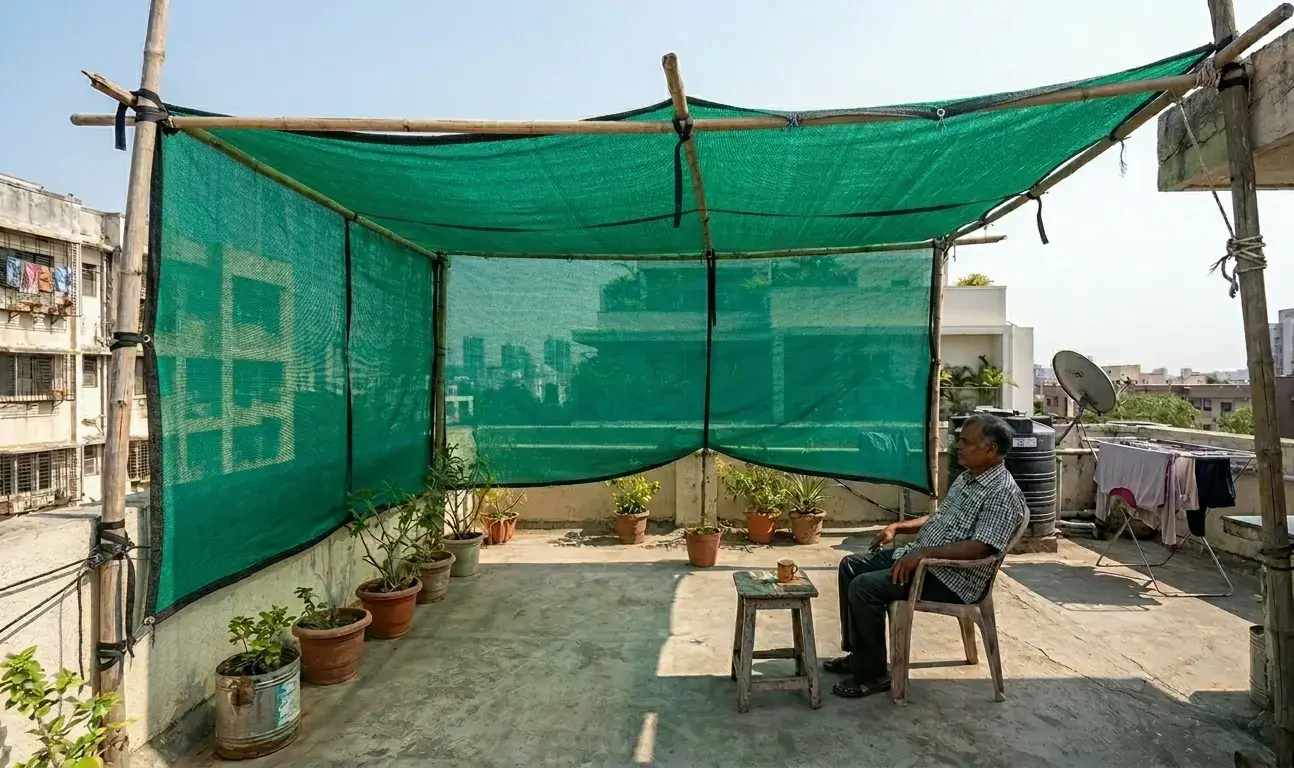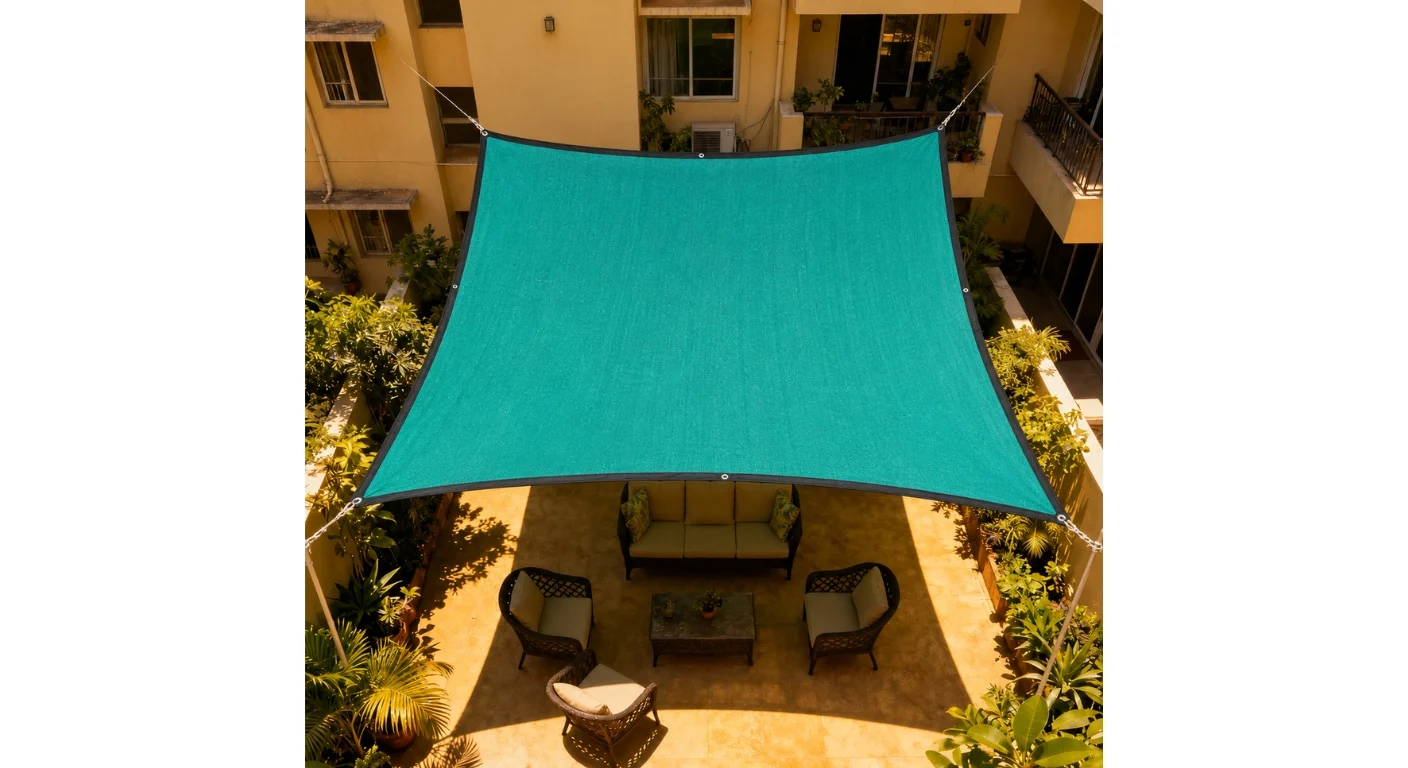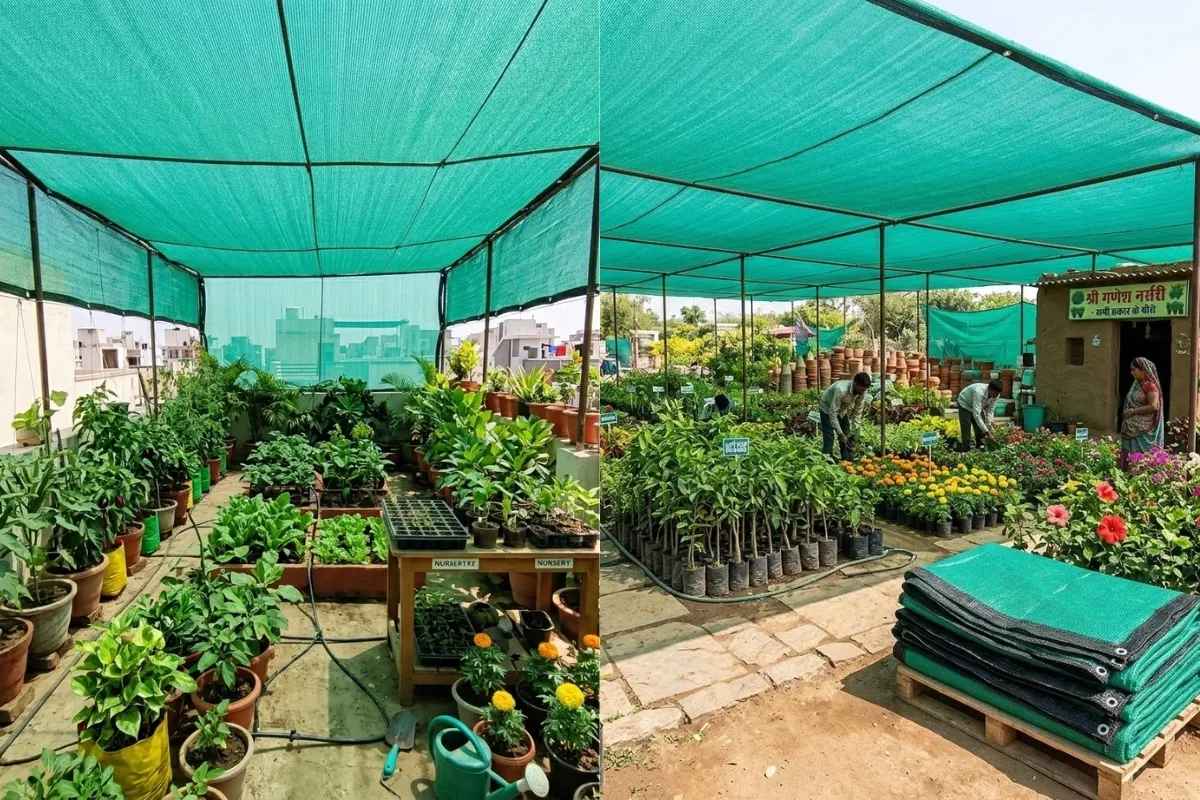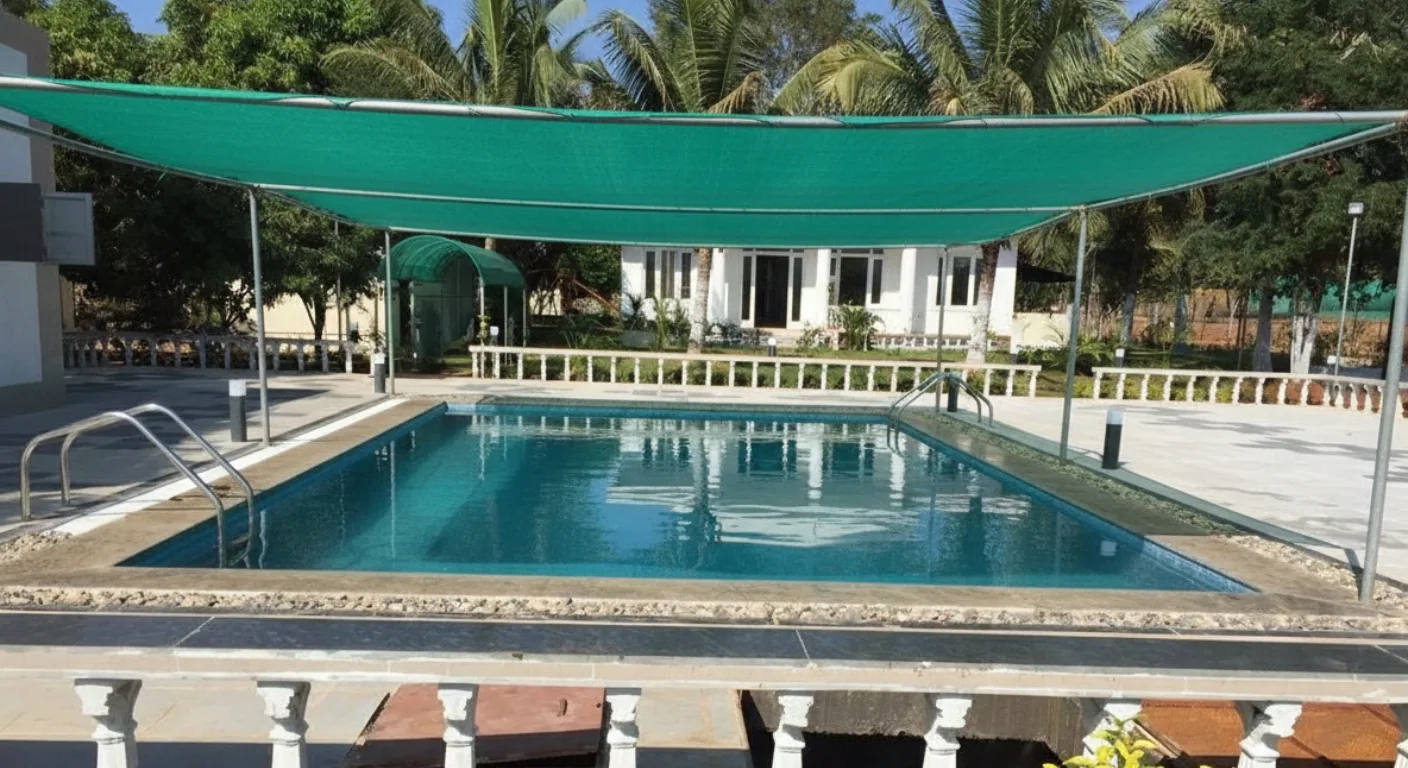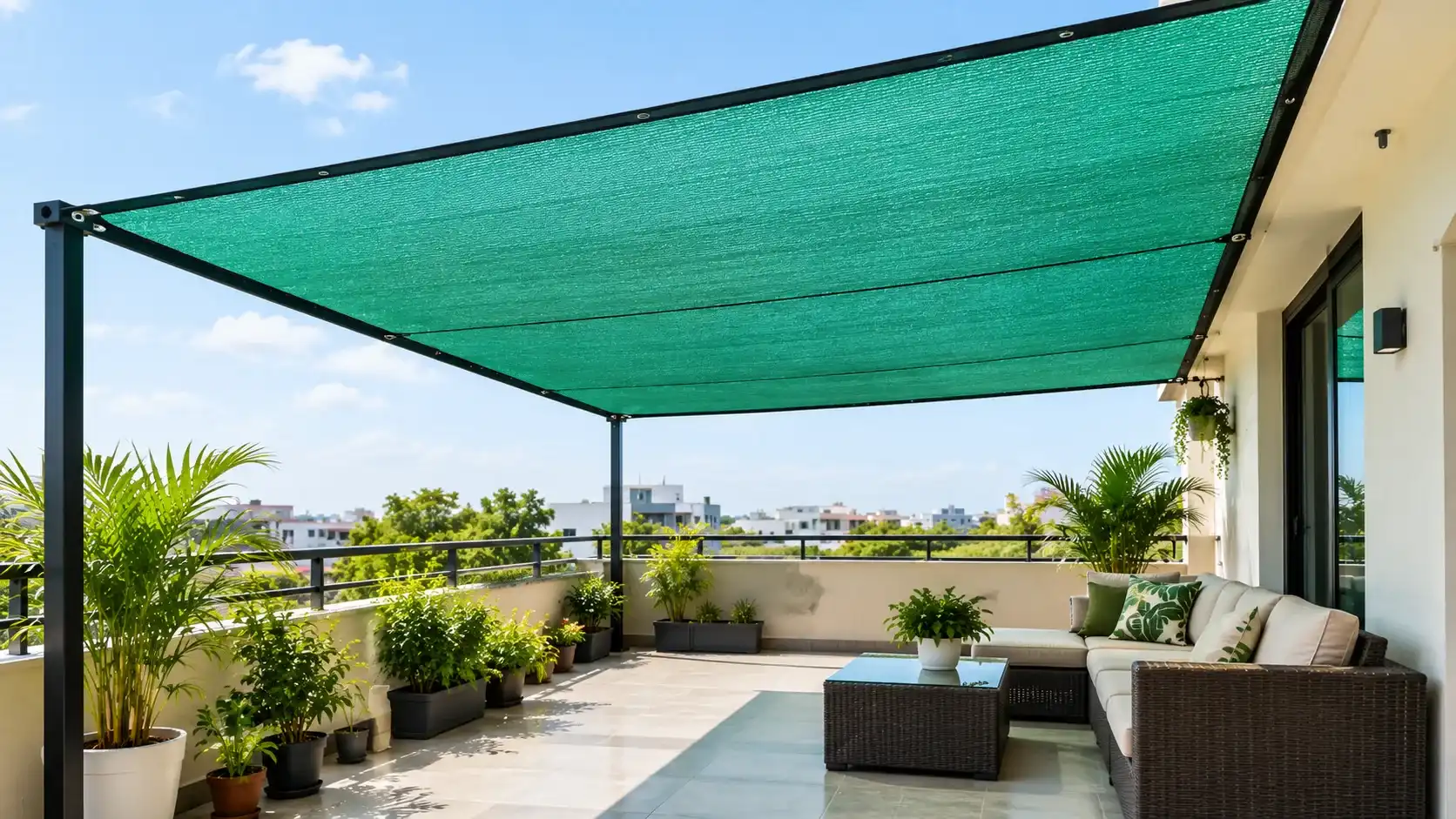


A shade net can make a balcony, terrace, garden, car parking area, or other outdoor space more comfortable during India’s hot and sunny months. But choosing a good shade net is only one part of the job. Correct installation also matters.
Many homeowners focus on the size, color, or shade level of the net but overlook simple installation details. The result can be loose fabric, poor shade coverage, unnecessary stress on the fixing points, or reduced usability of the shaded area.
If you are planning to install a green shade net for your home, these are seven common mistakes worth avoiding.
1. Measuring the Area Without Considering the Fixing Points
One of the most common mistakes is measuring only the area that needs shade.
For example, if you want a shade net for a balcony or terrace, the available fixing points may be inside the actual boundary of the area. The net also needs suitable space for fixing and tensioning.
Before ordering a shade net, measure:
- The position of walls, poles, or other fixing points
- The direction from which sunlight enters
- The space required for proper fixing
- Any obstacles such as pipes, doors, windows, or railings
A simple measurement plan can help you avoid ordering a size that is difficult to install.
2. Installing the Net Completely Flat
A shade net should not simply be stretched across an area without thinking about its position and tension.
For outdoor installations, the arrangement of the fixing points can affect how water, dust, and air behave around the covered area. A suitable installation angle can also make the setup more practical.
For a balcony, terrace, or garden, first decide where the net should provide the maximum useful shade during the hours when sunlight is strongest.
The goal is not just to cover an area with fabric. The goal is to create a usable shaded space.
3. Ignoring Sun Direction
This is another mistake that homeowners often make.
A shade net may cover the correct area but still leave part of the balcony or sitting space exposed if the position of the sun is not considered.
Before installation, observe your space at different times of the day.
For example:
- Morning sunlight may enter from one side.
- Afternoon sunlight can be stronger from another direction.
- A west-facing balcony may receive strong evening sunlight.
- A terrace may have direct sunlight for most of the afternoon.
Understanding the sun direction helps you decide where the shade should actually be positioned.
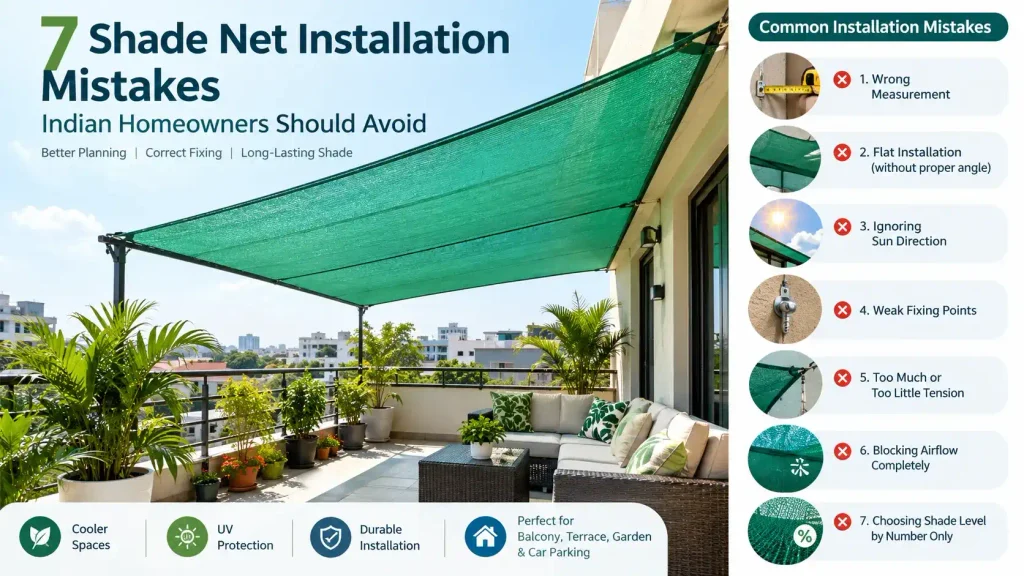
4. Using Weak or Unsuitable Fixing Points
The net itself is only one part of the installation.
The fixing points also need to be suitable for the location and installation method. Attaching a shade net to an unsuitable or weak point can create problems, particularly in outdoor areas exposed to wind.
Before installation, check the condition of:
- Walls
- Railings
- Poles
- Hooks
- Supporting structures
- Fixing hardware
For permanent or larger installations, homeowners should consider getting appropriate local installation advice instead of relying only on the appearance of a fixing point.
5. Making the Net Too Loose
A loose shade net can look untidy and may not provide consistent coverage.
At the same time, excessive tension is also not a good approach. The installation should provide enough tension for the net to remain properly positioned without putting unnecessary stress on the fabric or fixing points.
Follow the installation method recommended for the particular shade net.
For smaller home applications such as windows and balconies, a properly planned installation can make the net easier to use and maintain.
6. Blocking Airflow Completely
One advantage of many outdoor shade-net solutions is that they can provide shade while still allowing airflow.
This is particularly useful in Indian summer conditions, where simply blocking sunlight is not the only consideration.
When planning a green shade net for balcony or terrace, avoid creating an unnecessarily enclosed space unless the product is specifically designed for that purpose.
Leave suitable open areas where practical so that air can continue moving through the shaded space.
This can make the balcony, terrace, or garden feel more comfortable compared with a completely enclosed arrangement.
7. Choosing the Shade Level Only by Looking at the Number
A higher shade percentage may sound automatically better, but the right choice depends on the application.
A shade net for plants does not necessarily need the same characteristics as one used for a balcony, terrace, car parking area or outdoor sitting space.
Consider the purpose first:
For a home balcony:
Think about sunlight, privacy, airflow, and the time of day when the area becomes hot.
For a terrace:
Consider the size of the area, sun direction, fixing points, and how the shaded space will be used.
For a garden:
Consider the plants and their sunlight requirements rather than choosing a shade level only because it is higher.
For car parking:
Focus on coverage, installation structure, heat and UV exposure, and practical access for the vehicle.
The right shade solution is therefore based on the application, not just one specification.
A Simple Shade Net Installation Checklist
Before installing your shade net, check these points:
- Measure the complete installation area.
- Identify suitable fixing points
- Observe the sun direction
- Decide which area needs the most shade.
- Check the required installation angle.
- Avoid unnecessary tension
- Maintain practical airflow
- Choose the shade level according to the application.
- Check the net and fixing points periodically.
- Follow the product-specific installation instructions.
Read More: How to Measure a Space for Shade Net Installation? A Practical Guide for Balcony, Terrace & Garden
What About Indian Weather?
Indian outdoor spaces can experience strong sunlight, heat, dust, humidity, seasonal rain, and wind. That means a shade-net installation should be planned according to the local environment and the specific location.
A balcony in Ahmedabad may have different practical requirements from a garden in Bengaluru or a terrace in Delhi. Similarly, a residential installation may be different from a commercial outdoor seating area.
This is why there is no single installation method that is perfect for every home.
Choosing a Shade Net for Your Home
If you are searching for a shade net for home, start with the problem you want to solve.
- Do you want to reduce direct sunlight on a balcony?
- Do you want a more comfortable terrace?
- Do you need shade for a garden?
- Do you want to cover an outdoor sitting area?
- Or are you looking for protection for a car parking space?
Once the application is clear, you can select the appropriate size, material, shade level, and installation method.
Trinqet offers green shade-net solutions for different outdoor applications, including balconies, gardens, terraces, and other home spaces. The available product sizes can be selected according to the area and intended use.
Final Thoughts
Installing a shade net is not simply about stretching a net over an outdoor area. Measurement, sun direction, fixing points, tension, airflow, and application-specific requirements all matter.
By avoiding these common installation mistakes, homeowners can plan a more practical and comfortable shaded space.
If you are planning to install a green shade net for your balcony, terrace, garden, or outdoor area, first understand your space and sunlight conditions. Then select a suitable shade solution and install it according to the product’s recommended method.
A well-planned installation can make your shade net more useful, easier to maintain, and better suited to everyday Indian outdoor living.
FAQs
1. Can I install a shade net on my balcony?
Yes. Shade nets can be used for suitable balconies, provided there are appropriate fixing points and the product size matches the space.
2. How do I measure a balcony for a shade net?
Measure the area you want to shade and also check where the net can be safely fixed. Do not measure only the open floor area.
3. Should a shade net be completely tight?
The net should be properly positioned and tensioned according to the product’s installation method. Avoid both excessive looseness and unnecessary tension.
4. Which shade net is suitable for Indian homes?
The suitable option depends on the application, sunlight exposure, required coverage, and installation location. A balcony, garden, and car parking area may require different solutions.
5. Can a shade net reduce heat on a balcony?
A shade net can reduce direct solar exposure and make the shaded area more comfortable. The actual result depends on sunlight, airflow, installation, and surrounding conditions.