
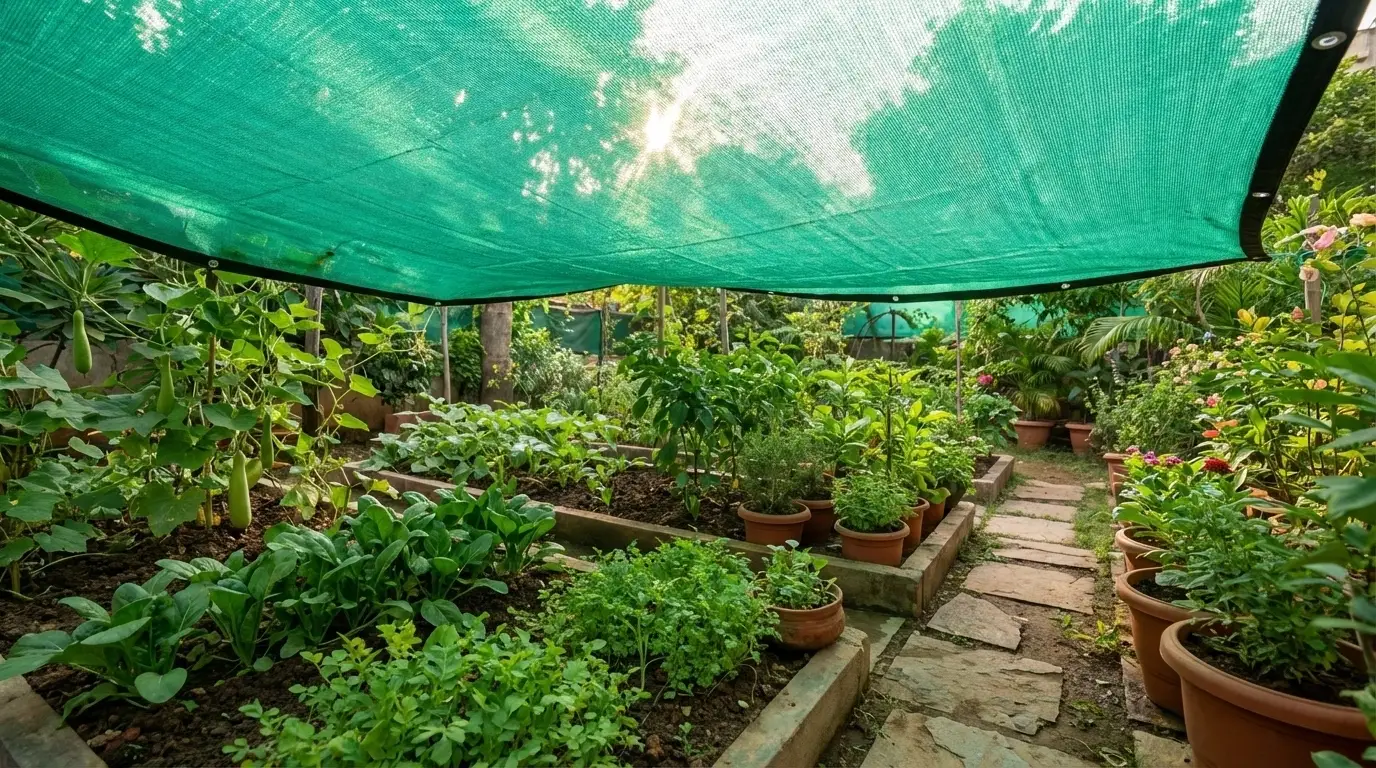
In India, the temperatures can get extremely high. The weather is changing a lot. So we need to protect our plants from too much sunlight and heat. This is very important for our plants to grow well. A garden shade net is a way to do this. It is also not very expensive. People who have gardens at home, people who love gardening on their terraces and people who have plant nurseries can all use garden shade nets.
It does not matter what kind of plants you grow, like vegetables, flowers or plants that look nice. Using a green shade net for your plants can make a difference. Your garden shade net will help your plants stay healthy and give you a yield.
In this blog, we will explore what a garden shade net is, what the benefits of a garden shade net are, how people use a garden shade net, the shade percentages of a garden shade net and how to choose the best green shade net for your plants.
What Is a Garden Shade Net?
A garden shade net is a specially designed net made from UV-stabilized HDPE material that helps control the amount of sunlight reaching plants. It reduces heat stress, protects plants from harsh sunlight, and creates a balanced growing environment.
A green shade net for a garden is the most commonly used option because it provides uniform light diffusion and supports natural plant growth.
How Does a Green Shade Net Protect Plants?
A green shade net works by:
- Reducing excess sunlight and heat
- Preventing leaf burn and wilting
- Maintaining soil moisture by reducing evaporation
- Protecting plants from wind, dust, and extreme weather
By controlling sunlight exposure, a shade net for plants helps maintain the ideal temperature required for photosynthesis and growth.
Benefits of Using Garden Shade Net
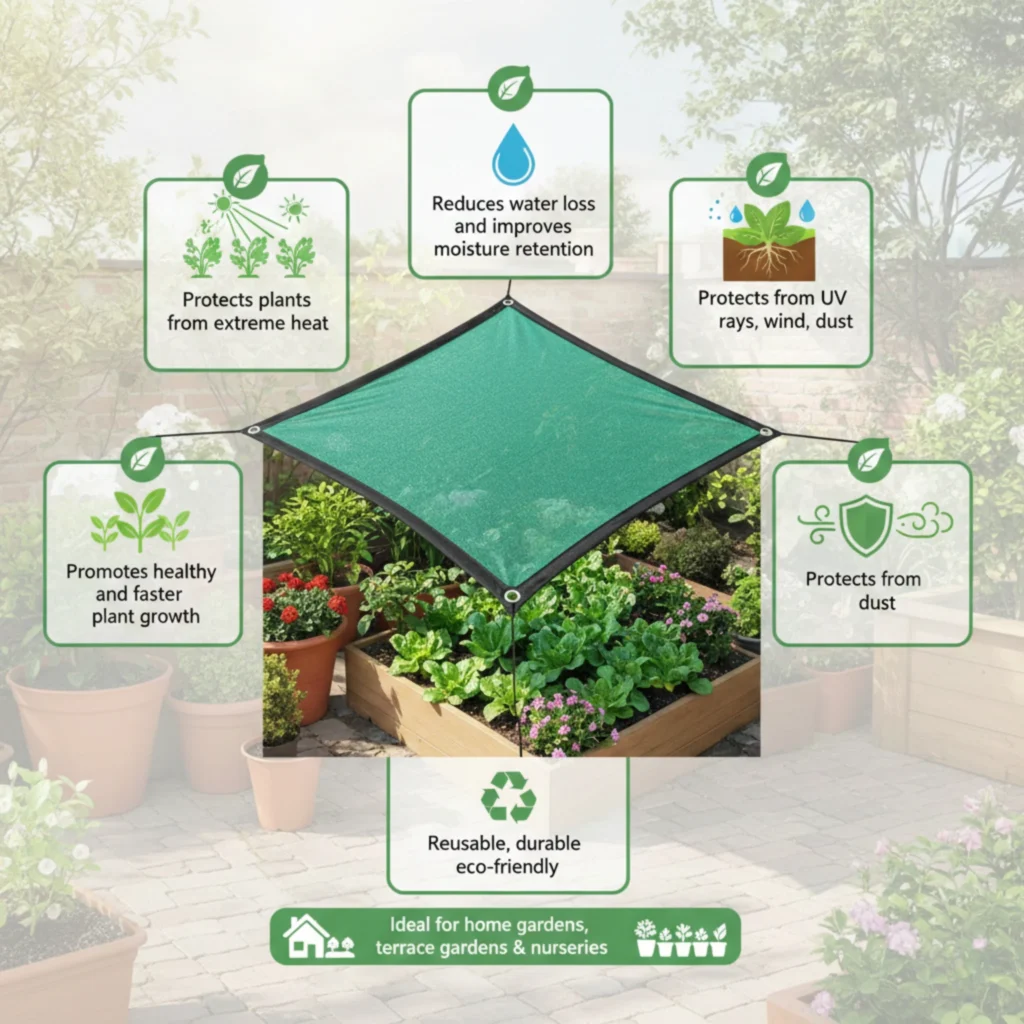
Using a garden shade net for plants offers multiple advantages:
- Protects plants from extreme heat
- Reduces water loss and improves moisture retention
- Promotes healthy and faster plant growth
- Protects from UV rays, wind, and dust
- Reusable, durable, and eco-friendly
- Ideal for home gardens, terrace gardens & nurseries
This makes it one of the best shade net solutions for the Indian climate.
Best Green Shade Net Percentage for Plants
Choosing the correct shade percentage is very important for plant health.
50% Green Shade Net
Suitable for: vegetables, herbs, flowering plants and many home gardens.
75% Green Shade Net
Suitable for: areas receiving stronger sunlight, selected nursery plants and shade-tolerant plants.
90% Shade Net
Suitable for: plants and applications that require higher levels of shading.
Tip: For most home gardeners, a 50% or 75% green shade net works best.
Where Can You Use a Garden Shade Net?
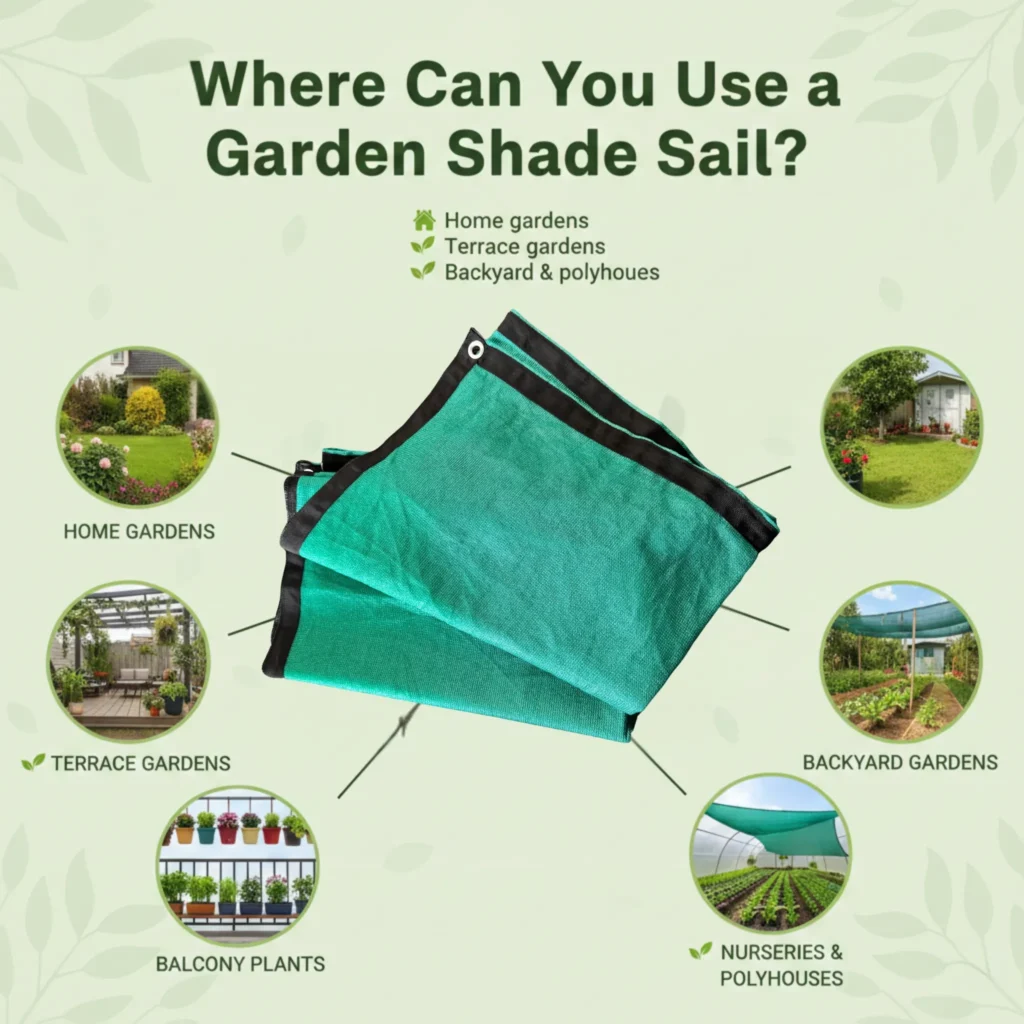
A green shade net for the garden can be used in many areas:
- Home gardens
- Terrace gardens
- Balcony plants
- Backyard gardens
- Nurseries & polyhouses
It’s a flexible and easy solution for both small and large gardening spaces.
How to Choose the Best Garden Shade Net for the Indian Climate
When selecting a shade net, consider these factors:
- Shade percentage (50%, 75%, or 90%)
- UV-stabilised HDPE material
- Green colour for better light diffusion
- Weather resistance & durability
- Long life under Indian sun conditions
A UV-protected green shade net ensures long-term performance and plant safety.
How to Install Shade Net in Your Garden
Installing a shade net is simple:
- Fix it at a suitable height for proper air circulation
- Ensure the net is not touching plants directly
- Use ropes, clamps, or frames for strong support
- Adjust seasonally based on sunlight intensity
Correct installation ensures maximum benefit from your garden shade net.
Can Shade Nets Support Plant Growth?
A properly selected shade net can help create more suitable growing conditions by managing excessive sunlight and heat exposure around plants.
Benefits may include:
- Reducing exposure to intense direct sunlight
- Helping reduce moisture loss from soil
- Providing filtered and diffused light
- Protecting young plants from harsh outdoor conditions
The actual results depend on the plant variety, shade percentage, climate, season and installation method.
Why Green Shade Net Is Best for Plants
Green shade nets are preferred because:
- They diffuse sunlight evenly
- Create a natural growing environment
- Support balanced photosynthesis
- They are visually soothing for gardens
That’s why a green net for garden plants is widely recommended by gardening experts.
Why Choose Trinqet Garden Shade Net?
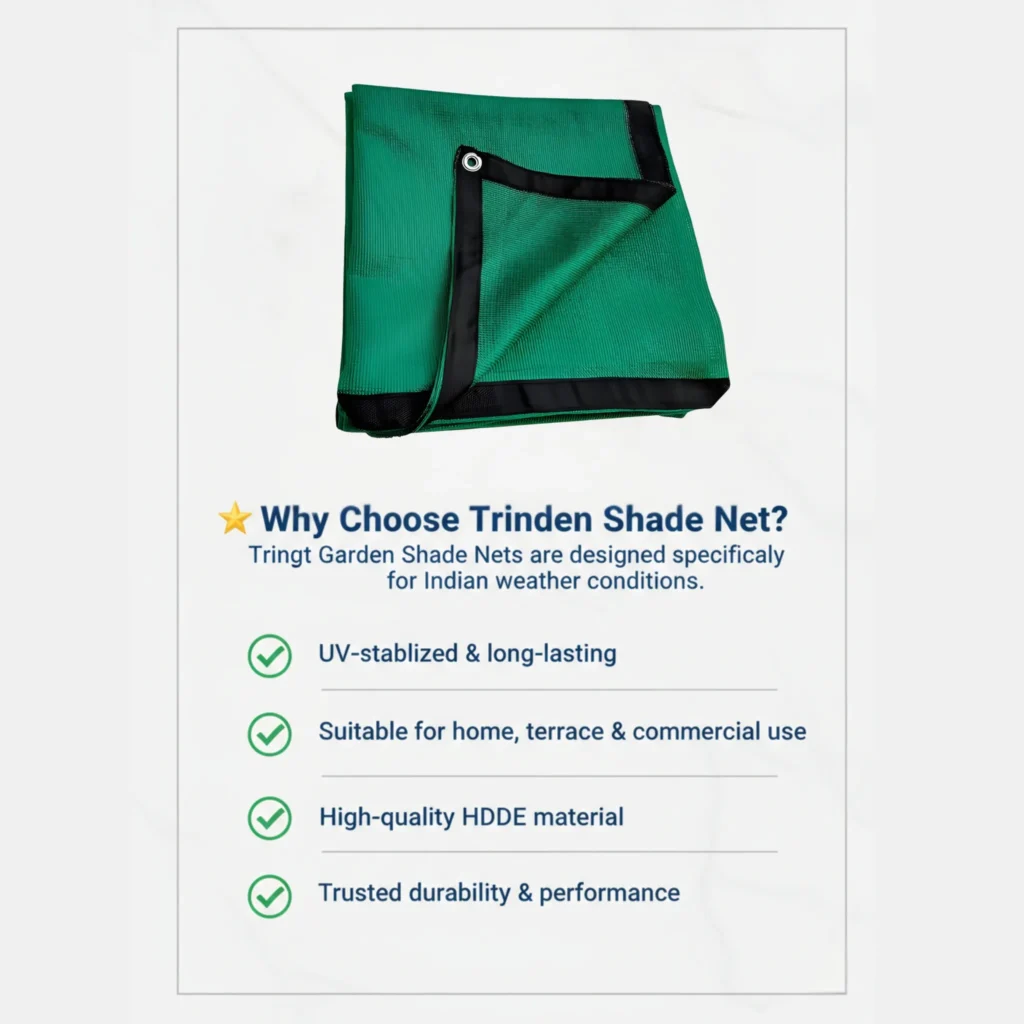
Trinqet Garden Shade Nets are designed specifically for Indian weather conditions.
- UV-stabilized & long-lasting
- Suitable for home, terrace & commercial use
- High-quality HDPE material
- Trusted durability & performance
If you’re looking to buy garden shade net online, Trinqet offers a reliable and effective solution.
FAQs – Garden Shade Net
Q1. Which shade net is best for garden plants?
50% or 75% green shade net is best for most garden plants.
Q2. Can I use a shade net for terrace garden?
Yes, garden shade nets are ideal for terrace and rooftop gardens.
Q3. Is a green shade net good for vegetables?
Yes, green shade nets help vegetables grow healthier by controlling heat.
Q4. How much sunlight do plants need under a shade net?
Most plants grow well with filtered sunlight provided by a 50–75% shade net.
Conclusion
A garden shade net is a practical way to manage excessive sunlight and heat around plants. By choosing the right shade percentage, material and installation method, gardeners can create a more suitable growing environment for vegetables, flowers, herbs and nursery plants.
For home gardens, terrace gardens and other outdoor growing spaces, a UV-stabilized HDPE green shade net can be a useful option for managing sunlight exposure. Trinqet offers green shade nets in different sizes and shade levels for a range of outdoor applications.
